When the mercury rises and the sun hangs heavy in the sky, nothing revitalizes the palate quite like a cold, crisp Watermelon Canapes recipe. This dish is a masterclass in culinary contrast, marrying the hydrating sweetness of peak-season fruit with the sharp, briny bite of aged feta cheese. It is a visual and sensory triumph that transforms humble backyard ingredients into a sophisticated gourmet starter.
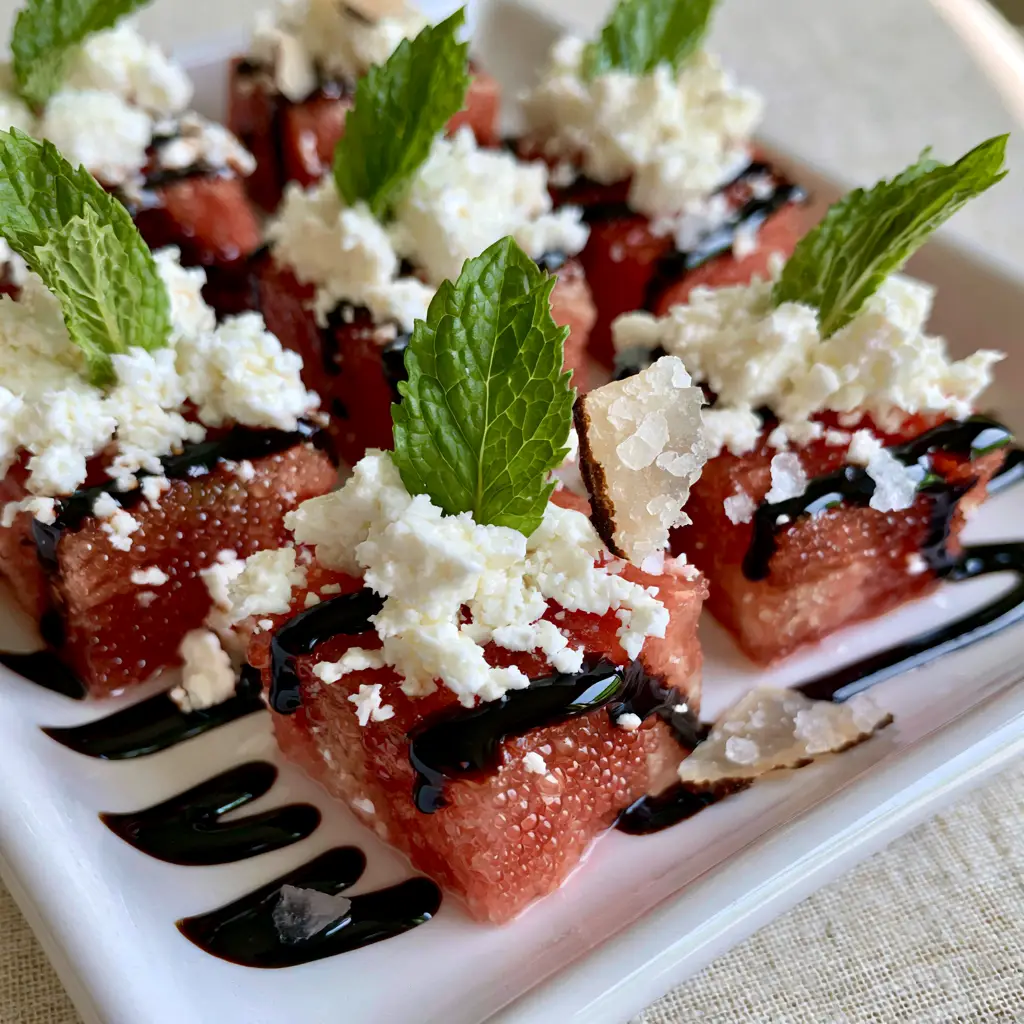
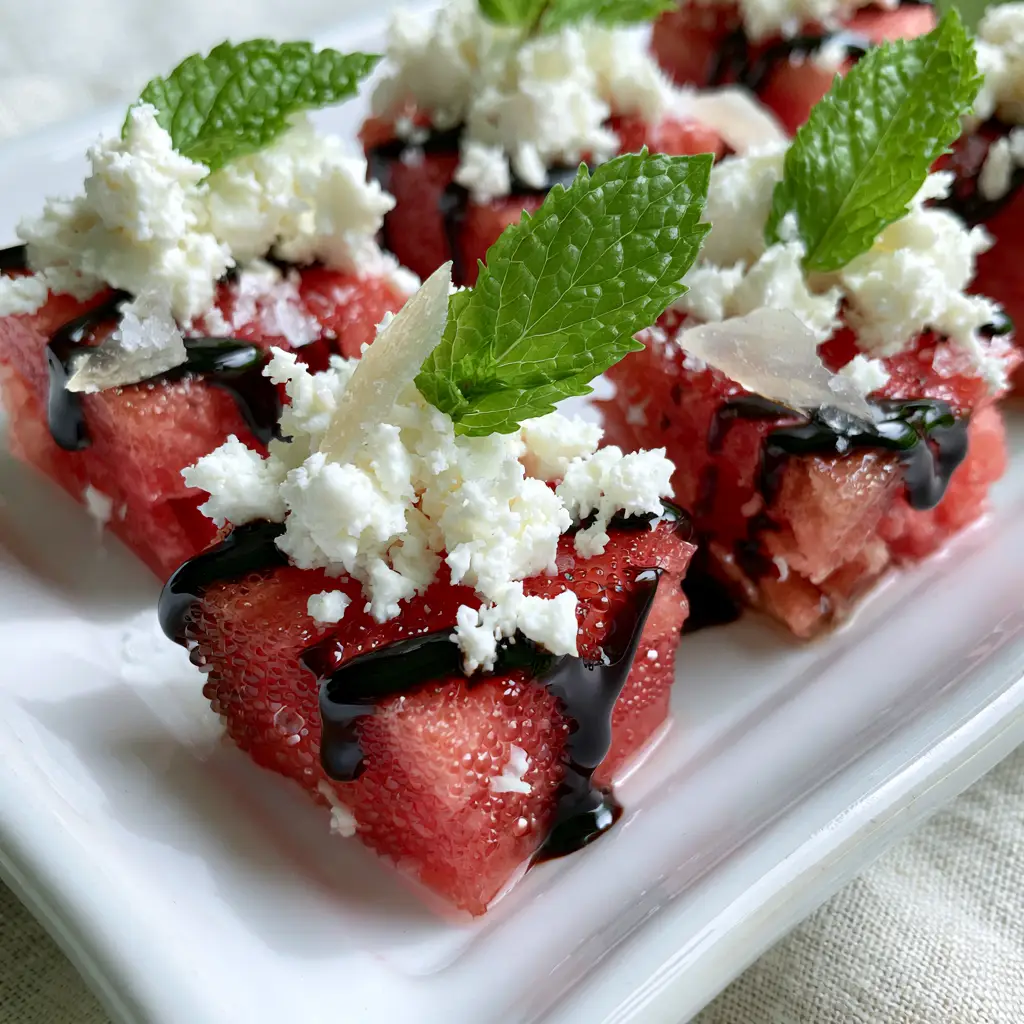
Imagine a minimalist white ceramic platter, weighted with perfectly uniform cubes of ruby-red watermelon. Each piece is topped with a snowy mound of crumbled feta and a single, vibrant green mint leaf that adds a herbal perfume to every bite. The final flourish—a thick, glossy dark balsamic glaze—zig-zags across the fruit, while large flakes of Maldon sea salt catch the soft natural daylight like tiny diamonds.
This Watermelon Canapes recipe isn’t just an appetizer; it’s a cooling experience designed for the hottest days of the year. Whether you are hosting an elegant garden party or looking for a light addition to your summer dinner ideas, these bite-sized delights offer a sophisticated flavor profile that belies their simple preparation. Let’s dive into the science of why this combination works and how you can achieve that perfect “macro-photo” look at home.
The Visual and Flavor Profile of Your Summer Masterpiece
- Textural Contrast: Experience the satisfying crunch of chilled watermelon followed by the creamy, crumbly melt of high-quality white feta cheese.
- Salt-Sweet Balance: The natural sugars in the watermelon are heightened by the mineral-rich flakes of sea salt, creating a complex flavor loop.
- Aromatic Freshness: Whole fresh mint leaves provide a cooling menthol finish that cleanses the palate between bites.
- Acidic Depth: A thick, glossy balsamic glaze provides the necessary acidity to cut through the richness of the cheese and the sweetness of the fruit.
- Chilled Perfection: Served straight from the refrigerator, these canapes feature tiny beads of condensation that signal immediate refreshment.
Essential Ingredients for the Perfect Watermelon Canapes Recipe
Cold, Crisp Watermelon: You will need 4 cups (600g) of seedless watermelon, cut into uniform 1-inch (2.5cm) cubes. Choose a fruit that feels heavy for its size and has a prominent creamy-yellow “field spot,” indicating it ripened fully on the vine for maximum sugar content.
Crumbled White Feta Cheese: Use 4 oz (115g) of high-quality feta, preferably stored in brine for the best texture. The cheese should be crumbled by hand just before serving to maintain those rustic, jagged edges that look so striking on a white platter.
Fresh Whole Mint Leaves: You will need 24 small, vibrant green mint leaves, plucked from the top of the sprig. Mint acts as both a visual anchor and a flavor bridge, connecting the savory cheese to the sweet fruit.
Thick Glossy Balsamic Glaze: Use 1/4 cup (60ml) of a premium, store-bought balsamic glaze or a homemade reduction. The consistency must be thick enough to hold its shape in artistic zig-zags rather than running off the fruit immediately.
Flaky Sea Salt: 1 tsp (5g) of Maldon sea salt or fleur de sel is the “invisible” hero that makes the colors pop. These large, flat crystals provide a focused burst of salinity without dissolving instantly into the watermelon’s moisture.
Tools Required for Professional Results
To achieve the professional, high-resolution aesthetic seen in gourmet food photography, a sharp chef’s knife is non-negotiable. A dull blade will crush the cell structure of the watermelon, causing it to lose its juice and “crisp” appearance before it hits the plate. You will also need a large, minimalist white ceramic platter to provide the neutral background that allows the vibrant reds and greens to shine.
For the balsamic application, a squeeze bottle with a fine tip is highly recommended. This allows you to create the “artistic zig-zags” described in the visual blueprint with precision and control. Finally, a small pair of culinary tweezers can help in placing each mint leaf perfectly atop the feta mounds without disturbing the cheese.
Step-by-Step Instructions for the Watermelon Canapes Recipe
Preparing the Watermelon Base
Begin by slicing the ends off your chilled watermelon to create a stable base. Using a sharp knife, remove the rind and any white pith until only the deep red flesh remains. Slice the melon into 1-inch (2.5cm) thick rounds, then into strips, and finally into uniform 1-inch (2.5cm) cubes.
Place the cubes on a paper-towel-lined tray and refrigerate for at least 30 minutes. This “dry-chilling” step is a secret professional tip; it removes excess surface moisture, ensuring the feta and glaze stay in place rather than sliding off. Look for the watermelon to develop a matte, cold appearance with tiny beads of condensation forming as it meets the air.
Assembling the Cheese and Mint Toppings
Arrange the chilled watermelon cubes on your minimalist white platter, leaving about half an inch of space between each. Take your crumbled feta and place a “generous pile” on the center of each cube. Aim for a rustic, peaked look rather than a flat layer to create vertical height for the camera.
Select your 24 most vibrant mint leaves. Gently press one whole leaf into the top of the feta pile on each cube. The moisture from the cheese will act as a natural adhesive, keeping the leaf upright and visible.
The Artistic Finish: Glaze and Salt
Just before serving, take your thick balsamic glaze. Starting from one side of the platter, move your hand in a steady, rhythmic zig-zag motion across the entire arrangement. The glaze should drape over the white feta and dark red watermelon in a continuous, glossy line.
Finish the dish by sprinkling the Maldon sea salt from a height of about 12 inches (30cm). This ensures an even distribution of the “large flakes” across the cubes. The salt crystals should catch the light, adding a sparkling texture to the juicy watermelon surface.
Expert Tips for Appetizer Success
- Temperature Control: Always serve these canapes immediately after assembly. If left at room temperature, the salt will draw out the watermelon juice, and the feta will begin to soften, losing its structural integrity.
- The “Field Spot” Rule: When shopping for the Watermelon Canapes recipe, look for a yellow spot, not a white one. A yellow spot means the melon sat on the ground longer, developing more natural sugars.
- Glaze Consistency: If your balsamic glaze is too thin, simmer it in a small saucepan for 5-10 minutes until it coats the back of a spoon. Let it cool completely before drizzling, or it will melt the feta.
- Mint Preparation: To keep mint leaves from wilting, keep them in a bowl of ice water until the moment you are ready to assemble. Pat them dry thoroughly before placing them on the cheese.
Storage and Make-Ahead Advice
The Watermelon Canapes recipe is best enjoyed fresh, but you can prep the components in advance. The watermelon cubes can be cut and stored in an airtight container in the fridge for up to 24 hours. However, do not add the salt, feta, or glaze until minutes before your guests arrive.
Leftovers do not store well because the salt and balsamic vinegar will cause the watermelon to become macerated and soft. This is a “zero-waste” recipe—only assemble as many as you plan to eat in one sitting. If you have leftover watermelon, it makes an excellent base for a summer lunch meal prep smoothie or fruit salad.
Perfect Pairings for a Summer Soiree
These canapes are the ultimate opening act for a light, seasonal menu. Pair them with a crisp caprese pasta salad to keep the Mediterranean theme going. The acidity of the tomatoes and the creaminess of the mozzarella in the salad complement the feta perfectly.
If you are planning a full outdoor spread, consider serving these alongside other fresh options like a corn salad or as a refreshing prelude to various summer grilling recipes. The sweet and salty profile also makes them a surprising but effective accompaniment to spicy grilled chicken or shrimp.
Frequently Asked Questions
You can prep the watermelon and feta separately up to 24 hours in advance, but do not assemble them until 15-20 minutes before serving. The salt and balsamic will make the watermelon soggy if left too long.
Look for a watermelon that is heavy for its size and has a deep yellow ‘field spot.’ This ensures the fruit is ripe, sweet, and structurally sound enough to be cut into clean cubes.
Yes, you can use a high-quality almond-based or coconut-based vegan feta crumble. Ensure it has a salty, tangy profile to maintain the recipe’s flavor balance.
If you prefer a milder taste, fresh goat cheese or small pearls of mozzarella can work. However, feta is recommended for its specific briny contrast to the sweet watermelon.
This usually happens if the watermelon is too wet or the glaze is too thin. Pat the cubes dry with a paper towel and ensure your glaze is a thick, syrupy reduction that holds its shape.
The Ultimate Refreshing Watermelon Canapes Recipe
Ready to impress your guests with the most photographed appetizer of the summer? Follow this precise method to create a dish that is as beautiful as it is delicious. This Watermelon Canapes recipe is a testament to the power of fresh, high-quality ingredients handled with care.
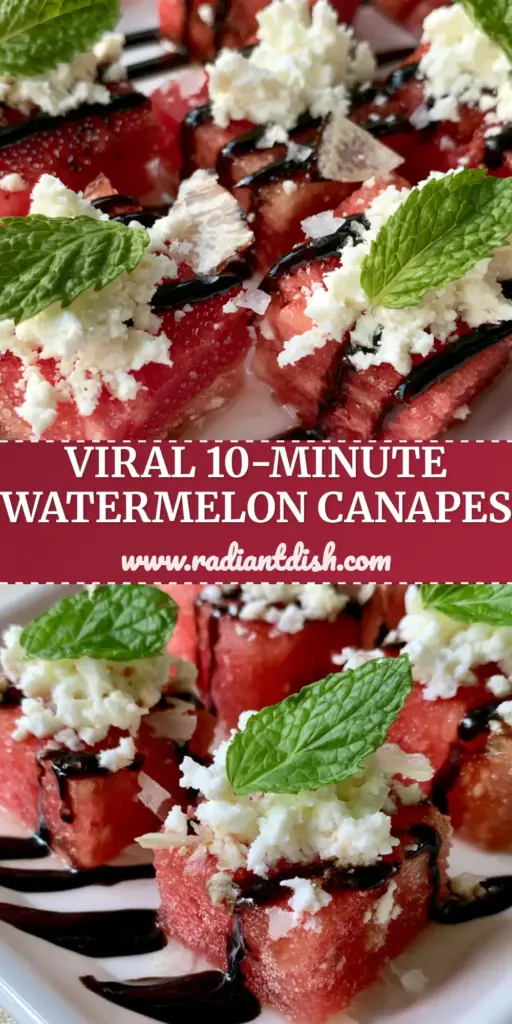
Watermelon Canapes Recipe: The Ultimate Refreshing Summer Appetizer
Ingredients
Equipment
Method
- Cut the chilled watermelon into uniform 1-inch (2.5cm) cubes. Place them on paper towels to absorb excess surface moisture.
- Arrange the cubes on a white platter. Top each cube with a generous pile of crumbled feta and one whole mint leaf.
- Drizzle the thick balsamic glaze in artistic zig-zags across the cubes and sprinkle with large flakes of sea salt just before serving.
Notes
Ensure the watermelon is thoroughly chilled before cutting for the best 'beads of condensation' look.
Conclusion and Join Our Culinary Community
The Watermelon Canapes recipe is more than just a snack; it’s a celebration of summer’s bounty. By focusing on the contrast of textures and colors—the glossy glaze against the matte feta and the vibrant mint against the ruby melon—you create a dish that satisfies both the eyes and the palate. We hope this becomes a staple at your seasonal gatherings.
Did you try this recipe? We would love to see your “macro-photo” recreations! Leave a comment below, sign up for our newsletter for more elite recipes, and don’t forget to share this post to your favorite boards on Pinterest.