Creating your own beef summer sausage at home is a culinary rite of passage that rewards the patient cook with unparalleled flavor. This recipe yields a dense, premium deli texture that puts store-bought logs to shame. With its signature deep-red hue and striking mahogany-colored casing, this sausage is as visually stunning as it is delicious.
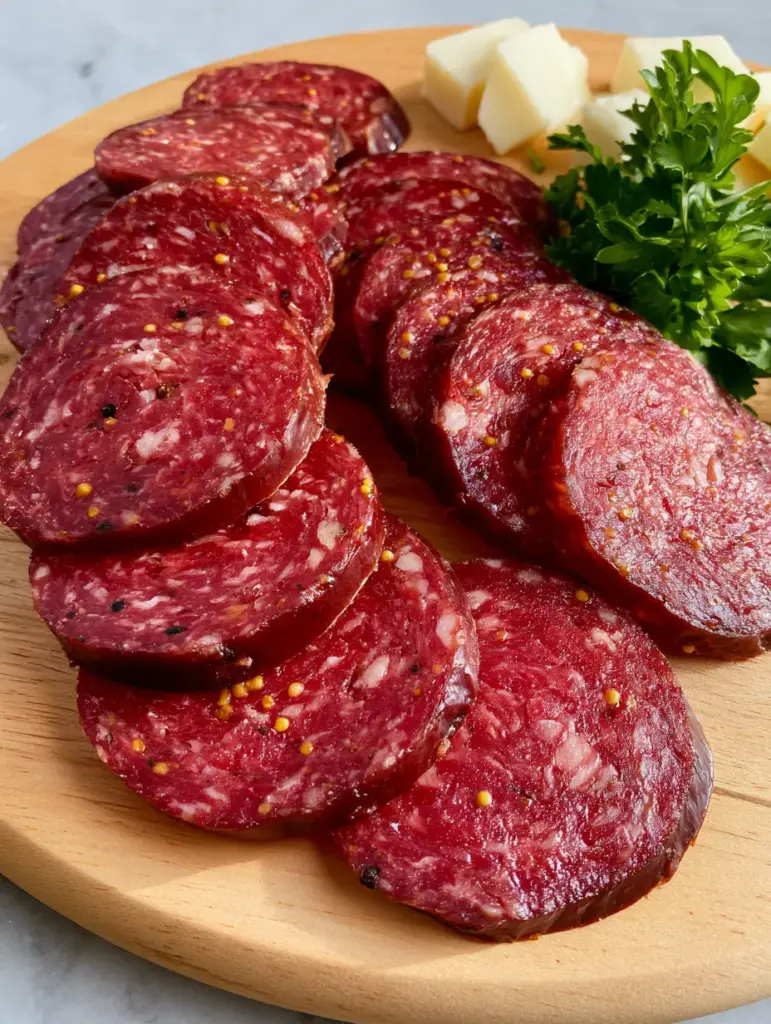
The beauty of a handcrafted beef summer sausage lies in the control you have over the ingredients. We are focusing on a traditional profile, featuring the sharp snap of yellow mustard seeds and the bold heat of cracked black peppercorns. Every slice reveals a beautiful marbling of fine white fat, creating a melt-in-your-mouth experience that is truly gourmet.
Whether you are preparing a sophisticated charcuterie board or looking for the perfect protein to pair with your favorite bbq side dishes, this recipe is the gold standard. Let’s dive into the science of curing and the art of flavor to create a masterpiece that would make any master butcher proud.
The Secrets Behind a Perfect Deli-Style Texture
- Dense, Premium Texture: Achieving the perfect sliceability requires a specific fat-to-lean ratio and a cold-temperature mixing process.
- Visual Depth: The rich mahogany casing is achieved through a combination of slow roasting and the precise use of curing agents.
- Flavor Burst: Whole yellow mustard seeds and hand-cracked peppercorns provide textural contrast and a professional “speckled” appearance.
- Optimal Marbling: By using chilled ground beef and avoiding over-mixing, we preserve the fine white fat pockets seen in high-end deli meats.
The Flavor Foundation: Essential Ingredients
80/20 Ground Beef: You need 2 lbs (907g) of high-quality ground beef to ensure the correct fat content for that signature marbling. The fat is what carries the flavor of the peppercorns and mustard seeds throughout the meat.
Prague Powder #1 (Curing Salt): This is the non-negotiable “invisible” ingredient that provides the deep-red color and ensures food safety during the long, low-temperature cook. Use 1/2 tsp (3g) to achieve that professional beef summer sausage look.
Whole Yellow Mustard Seeds: These 2 tbsp (22g) of seeds provide a pleasant pop and a subtle tang that cuts through the richness of the beef. They are a classic visual hallmark of traditional summer sausage.
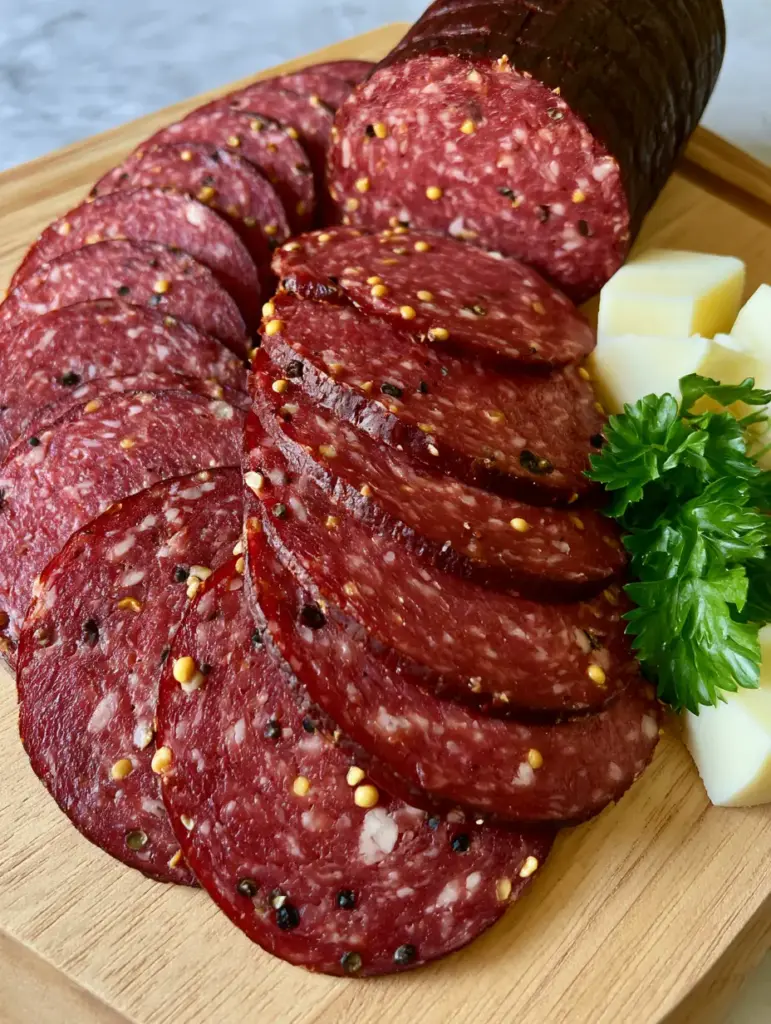
Cracked Black Peppercorns: Instead of fine powder, use 1 tbsp (7g) of coarsely cracked peppercorns. This creates the beautiful dark specks seen in the cross-section of each slice.
Garlic and Onion Powder: These 1 tsp (3g) each of aromatics provide the savory “umami” backbone without adding moisture that could ruin the sausage’s density.
Liquid Smoke: To achieve a “smoked” flavor and that dark mahogany casing without a dedicated smoker, 1 tsp (5ml) is added directly to the meat mixture. It mimics the traditional smokehouse environment perfectly.
Sea Salt Crystals and Parsley: Used for the final presentation, sea salt crystals enhance the beefiness, while fresh flat-leaf parsley adds a bright green contrast to the rich meat.
Essential Equipment for Charcuterie Success
To reach the level of quality described in our visual blueprint, you will need a few specific tools. A large non-reactive mixing bowl is essential for the curing process, as reactive metals can alter the flavor of the meat. You will also need plastic wrap or collagen casings (2.5-inch/64mm diameter) to form the characteristic log shape.
A reliable digital meat thermometer is the most important tool in your arsenal. Achieving a beef summer sausage with a firm, safe texture requires reaching an exact internal temperature. Finally, a wire rack set over a baking sheet allows for even air circulation, which is key to developing that uniform mahogany exterior.
Step-by-Step Mastery: Crafting the Perfect Log
Phase 1: The Cold Cure and Seasoning
In a large bowl, combine your 2 lbs (907g) of chilled ground beef with the curing salt, mustard seeds, cracked peppercorns, garlic powder, onion powder, and liquid smoke. It is vital to keep the meat chilled during this process to prevent the fat from softening, which would result in a greasy texture.
Mix by hand just until the spices are evenly distributed; do not overwork the meat or you will lose the fine marbling. Cover the bowl tightly with plastic wrap and refrigerate for 24 hours. This “cure time” allows the flavors to penetrate and the curing salt to develop that rich deep-red color.
Phase 2: Shaping and Rolling
Once cured, divide the meat into two equal portions. Roll each portion into a tight log approximately 2 inches (5cm) in diameter. If you aren’t using casings, wrap the logs tightly in heavy-duty plastic wrap, poking a few small holes with a toothpick to let air escape, then wrap again in aluminum foil.
Ensure the ends are twisted tightly to compress the meat. This compression is what creates the dense, premium deli texture that allows for thin, uniform slicing later on. If you have a chicken salad recipe you love, this sausage makes a fantastic smoky side addition to the plate.
Phase 3: The Low and Slow Roast
Preheat your oven to 175°F (80°C). Place the wrapped or cased sausages on a wire rack over a baking sheet. Roast until the internal temperature reaches exactly 160°F (71°C), which typically takes 3 to 4 hours. This gentle heat preserves the fat marbling without rendering it out.
Visual and sensory cues are vital here: the casing should transition from a pale pink to a dark, firm mahogany brown. The aroma should be intensely savory with a clear note of black pepper. For a lighter pairing after this rich cook, consider serving it alongside a roasted sweet potato black bean salad.
Phase 4: The Ice Bath and Firming
Immediately upon removing the sausages from the oven, plunge them into an ice-water bath for 10 minutes. This stops the cooking process instantly and “shocks” the casing, helping it stay firm and tight against the meat. This step is the secret to that professional, smooth outer surface.
After the ice bath, pat the logs dry and refrigerate them for at least 12 hours before slicing. The sausage must be completely chilled to achieve those uniform, thick slices. While the sausage chills, you could even whip up some firecracker hot dogs for the kids or enjoy a refreshing peach lemonade.
Expert Tips for Charcuterie Perfection
- Temperature Control: Always work with beef straight from the fridge. If the meat gets too warm during mixing, the fat will “smear,” and you’ll lose the white fat specks.
- Cracked vs. Ground: Use a mortar and pestle for the peppercorns. You want large pieces that provide a visual “pop” and a burst of flavor in every bite.
- Tight Rolling: The tighter you roll the logs, the better the final texture. Any air pockets left inside will turn into gray spots in your finished sausage.
- Slicing Technique: Use a very sharp chef’s knife or a meat slicer. For the best presentation, slice the sausage while it is cold to maintain the integrity of the fibers.
Storage and Serving Suggestions
Your homemade beef summer sausage will stay fresh in the refrigerator for up to 3 weeks if wrapped tightly in butcher paper or plastic wrap. For longer storage, you can vacuum seal the logs and freeze them for up to 3 months. Always thaw in the refrigerator to maintain the texture.
When serving, arrange uniform, thick slices on a clean wooden board. Pair with cubes of sharp white cheddar cheese and a few sprigs of fresh flat-leaf parsley for a professional look. A sprinkle of sea salt crystals over the meat just before serving will make the flavors truly dance on the tongue.
What to Serve With Your Summer Sausage
This sausage is a versatile powerhouse. It pairs beautifully with sharp cheeses and acidic accompaniments. We highly recommend serving it as part of a larger spread featuring a crisp roasted sweet potato black bean salad for a balance of textures.
If you are hosting a summer gathering, the smoky notes of the beef are the perfect precursor to grilled mains. You can even chop up leftovers to add a savory punch to a pasta dish or a hearty brunch platter. It’s a staple that elevates any meal.
Frequently Asked Questions
Absolutely. Follow the same temperature guidelines (175°F) and smoke until the internal temperature reaches 160°F for an even deeper, natural smoky flavor.
Yes, for this specific texture and safety profile. Curing salt prevents bacterial growth during the low-temperature cook and is responsible for the sausage’s deep-red color.
The dark mahogany color is a result of the liquid smoke, the curing salt reaction, and the slow-roasting process which dries the exterior slightly to form a ‘pellicle’ or firm skin.
The tang traditionally comes from lactic acid produced during fermentation. In this home version, the combination of mustard seeds and the curing process provides that classic savory and slightly acidic profile.
Crumbly sausage is usually caused by the fat getting too warm during the mixing process or not packing/rolling the logs tightly enough. Always keep your beef chilled.
The Master Beef Summer Sausage Recipe
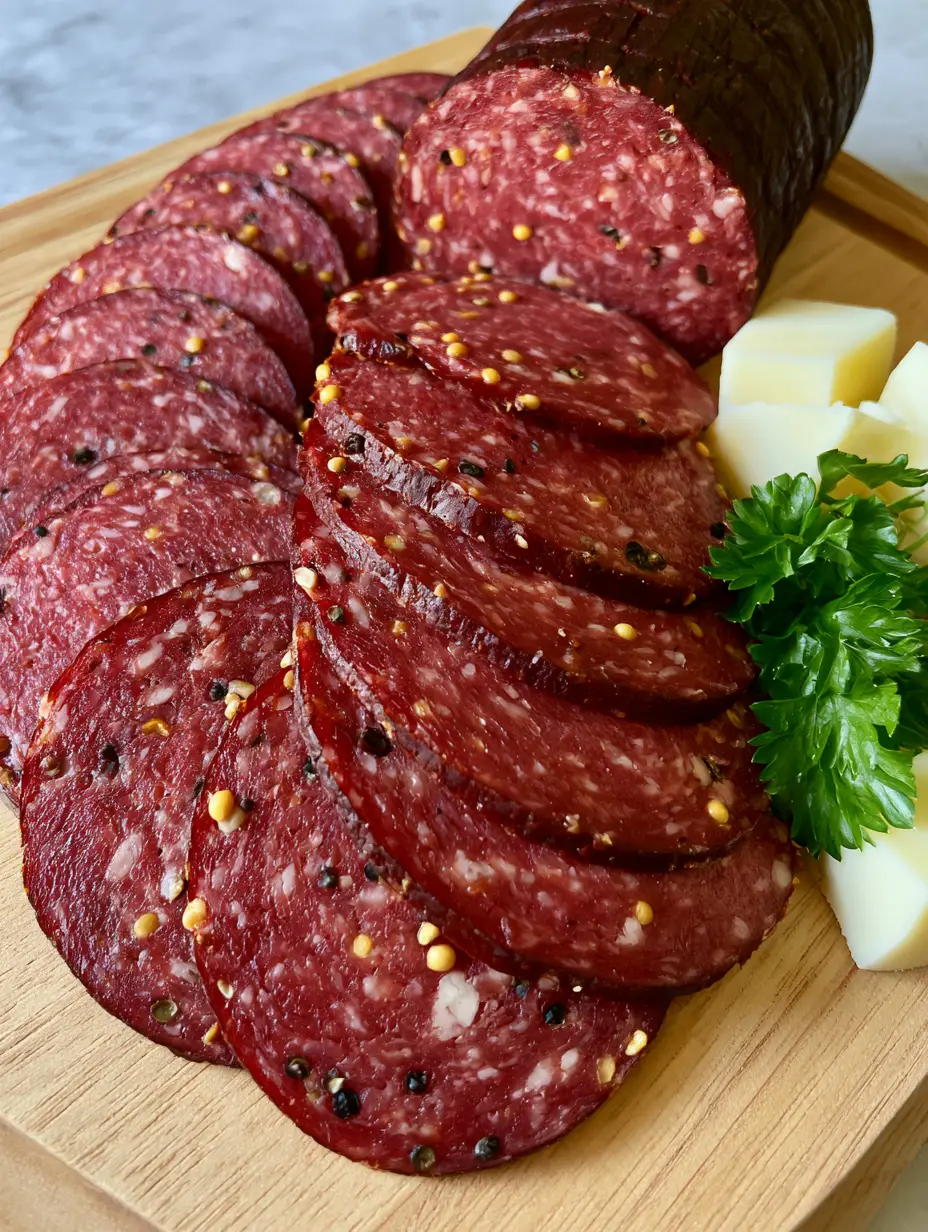
Beef Summer Sausage: The Ultimate Homemade Deli-Style Recipe
Ingredients
Equipment
Method
- In a large non-reactive bowl, combine chilled ground beef, curing salt, mustard seeds, cracked peppercorns, garlic powder, onion powder, and liquid smoke.
- Mix by hand until just combined. Cover tightly and refrigerate for 24 hours to develop color and flavor.
- Divide meat into two portions and roll into tight 2-inch logs. Wrap tightly in plastic wrap and then foil, or use collagen casings.
- Place on a wire rack in a 175°F (80°C) oven. Roast until the internal temperature reaches 160°F (71°C), about 3-4 hours.
- Immediately place cooked sausages into an ice water bath for 10 minutes to stop the cooking and tighten the casing.
- Refrigerate for at least 12 hours before slicing. Serve with sharp white cheddar cubes, fresh parsley, and a sprinkle of sea salt crystals.
Notes
Do not skip the 24-hour cure time, as this is essential for the deep red color.
Bringing the Deli Home
Mastering the beef summer sausage is a rewarding experience that transforms humble ground beef into a gourmet delicacy. The combination of slow-cured meat, sharp mustard seeds, and bold peppercorns creates a flavor profile that is both nostalgic and sophisticated. We hope this recipe becomes a staple in your kitchen!
Did you try this recipe? We’d love to hear about your results in the comments below. Don’t forget to share your photos with us and follow us on Pinterest for more culinary inspiration and charcuterie tips!