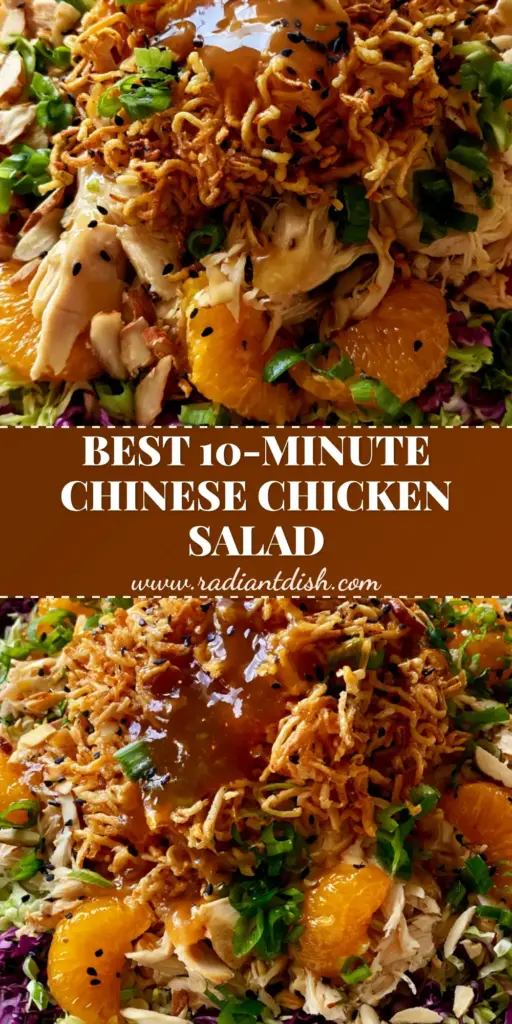
This Chinese Chicken Salad is a masterclass in textural harmony, blending the crunch of toasted noodles with the tenderness of moist shredded chicken. Every bite offers a vibrant explosion of color, from the deep purple cabbage to the bright, glistening mandarin orange segments.
Inspired by the iconic restaurant-style salads but elevated with a professional culinary touch, this recipe is designed to be as visually stunning as it is delicious. By using a wide matte white ceramic bowl, we allow the mountain of ingredients to breathe, showcasing the intricate details of the black sesame seeds and slivered almonds.
Whether you are looking for a refreshing lunch or a satisfying dinner, this classic chicken salad variation delivers an authentic, unedited look that feels like it was captured in natural daylight from a side window. Let’s dive into the forensics of this crunch-heavy masterpiece.
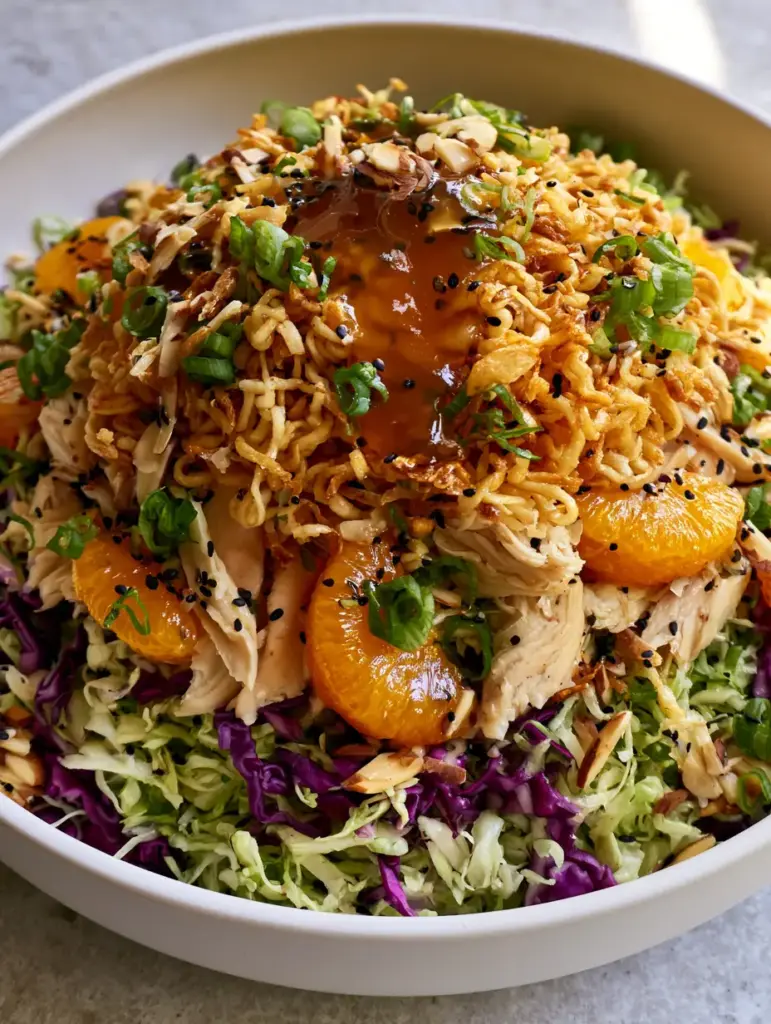
The Architecture of Crunch: Why This Salad Works
- Shatter-Crisp Texture: We don’t just use raw ramen; we toast the noodles until golden-brown to provide a nutty, buttery snap.
- Moisture Balance: By using rotisserie chicken, we ensure the protein remains succulent against the crisp cabbage base.
- Vibrant Visuals: The contrast between shredded green and purple cabbage creates a professional “rainbow” effect.
- Glossy Finish: Our translucent ginger dressing is designed to cling to the ingredients without making them soggy, catching the light perfectly.
Essential Components for the Ultimate Texture Profile
To achieve the specific visual result of a “mountain of moist shredded chicken,” the quality of your base ingredients is paramount. Each element plays a structural role in the dish’s final architecture.
Moist Shredded Rotisserie Chicken: 1 lb (454g). Using a pre-roasted bird ensures the meat is seasoned deeply and stays moist enough to hold the dressing’s sheen.
Crunchy Ramen Noodles: 1 package (85g), discarded seasoning. These are broken into small pieces and toasted to create that signature golden-brown heap described in our visual blueprint.
Shredded Green Cabbage: 4 cups (400g). This provides the “crisp” foundation and high-volume base needed for a vibrant salad presentation.
Shredded Purple Cabbage: 2 cups (200g). Beyond flavor, this adds the “bright purple” visual pop that makes the dish look high-resolution and professional.
Mandarin Orange Segments: 1 can (11oz/312g), drained. These must be “glistening,” so we look for segments packed in juice rather than heavy syrup for a cleaner look.
Slivered Almonds: 1/2 cup (50g). These add a secondary layer of crunch and a pale ivory color that contrasts with the dark sesame seeds.
Green Scallions: 4 stalks (30g), thin-sliced. Use both white and green parts to add a sharp, aromatic bite and a fresh garden-green aesthetic.
Black Sesame Seeds: 1 tbsp (9g). These are the “garnished heavily” finishing touch that provides the high-contrast detail against the orange and white chicken.
The Secret To the Translucent Sesame Ginger Dressing
Achieving a “thick, glossy, translucent honey-brown ginger dressing” requires a precise emulsion technique. You want the oil to be fully integrated so it doesn’t look greasy under natural light.
Rice Vinegar: 1/4 cup (60ml). This provides the essential acid that cuts through the richness of the chicken and almonds.
Honey: 3 tbsp (45ml). This is the key to the “glossy” and “translucent” appearance, providing the necessary viscosity.
Toasted Sesame Oil: 1 tbsp (15ml). This offers the “sesame” aroma that defines the olfactory experience of this versatile salad base.
Neutral Oil: 1/2 cup (120ml). Use grapeseed or canola to allow the ginger and soy flavors to shine through without interference.
Fresh Grated Ginger: 1 tbsp (15g). This adds the “ginger” kick and tiny visible fibers that prove the dressing is made from scratch.
Soy Sauce: 2 tbsp (30ml). This provides the “honey-brown” tint and the savory umami foundation.
Tools for a Professional Culinary Finish
To recreate the “extreme food detail” of the visual prompt, you need tools that allow for precision cutting and even heat distribution. A sharp chef’s knife is non-negotiable for the finely shredded cabbage.
You will also need a wide skillet to toast the noodles, ensuring they reach a uniform golden-brown without burning. A large wide matte white bowl is essential for the “overhead handheld smartphone photo” aesthetic, as it provides a neutral frame for the vibrant colors.
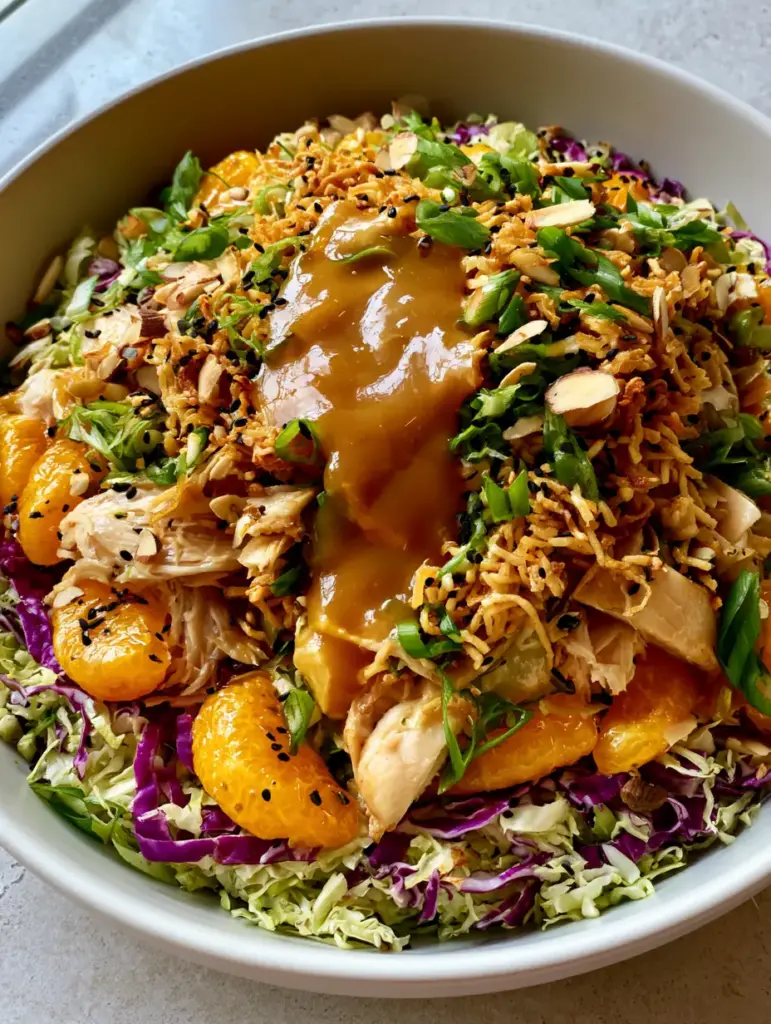
Step-by-Step Instructions for Visual Perfection
1. Achieving the Golden-Brown Ramen Crunch
Break the dry ramen noodles into small, bite-sized pieces into a medium bowl. Heat 1 tbsp (15ml) of neutral oil in a skillet over medium heat.
Add the noodles and slivered almonds to the pan simultaneously. Stir constantly for 3-5 minutes until you see a uniform toasted golden color and smell a nutty aroma; remove from heat immediately to prevent over-browning.
2. Creating the Cabbage Foundation
Finely shred the green and purple cabbage using a mandoline or a very sharp knife. Toss them together in your wide matte white bowl until the colors are evenly distributed.
This mix provides the “finely shredded crisp” base that supports the heavier toppings. Ensure the cabbage is bone-dry before assembling to maintain the “vibrant” look.
3. Preparing the Moist Protein Mountain
Hand-shred the rotisserie chicken into long, moist strips. Do not chop it with a knife, as hand-shredding creates more surface area for the dressing to cling to.
Pile the chicken in the center of the cabbage mix, creating a “mountain” effect. This vertical height is critical for both ad-optimized scrolling and visual appeal.
4. Emulsifying the Glossy Dressing
In a small glass jar, combine the honey, soy sauce, rice vinegar, and grated ginger. Slowly whisk in the oils until the mixture is thick, glossy, and translucent.
Observe the color; it should be a rich honey-brown. This dressing is designed to catch the soft natural daylight, so it must be smooth and free of large oil droplets.
5. The Final Artisanal Garnish
Layer the glistening mandarin oranges around the chicken mountain. Sprinkle the toasted ramen and almonds generously over the top.
Finish by drizzling the dressing over the center and garnishing heavily with thin-sliced scallions and black sesame seeds. The seeds should look like high-contrast specks against the colorful backdrop.
Expert Tips for High-Resolution Results
- Temperature Control: Ensure your toasted ramen has cooled completely before adding it to the salad to prevent the cabbage from wilting.
- The “Gloss” Factor: If your dressing looks dull, whisk in an extra teaspoon of honey to increase the light-reflectivity.
- Symmetry: When placing mandarin segments, space them evenly to ensure every “smartphone photo” angle looks curated.
- Dressing Timing: Only drizzle the dressing immediately before serving to keep the noodles from losing their “crunchy” status.
Storage and Meal Prep Strategy
This salad is an excellent candidate for meal prep, provided you store the components separately. Keep the shredded cabbage and chicken in airtight containers for up to 3 days.
The toasted ramen and almonds should be kept in a dry, room-temperature container to maintain their snap. Always store the dressing in a glass jar and give it a vigorous shake before applying to restore its glossy translucency.
What to Serve With Your Chinese Chicken Salad
While this salad is a complete meal on its own, it pairs beautifully with other vibrant textures. For a refreshing finish, try serving it alongside a tropical fruit medley or a chilled peach lemonade.
If you are hosting a larger gathering, this salad acts as a crisp palate cleanser for heavier dishes like spicy grilled favorites. For dessert, the citrus notes in the salad pair perfectly with a creamy orange cheesecake.
Frequently Asked Questions
To make it gluten-free, substitute the ramen noodles with toasted rice vermicelli or extra almonds, and use tamari instead of traditional soy sauce in the dressing.
Yes, but ensure it is poached or slow-cooked to maintain the ‘moist shredded’ texture. Avoid over-searing, which can make the chicken too dry for this specific salad profile.
The secret is to toast them in oil first and only add them to the salad immediately before serving. Storing them separately from the cabbage and dressing is crucial.
Absolutely. By using honey as a stabilizer and properly emulsifying the oils with the vinegar, you achieve a glossy, translucent finish that looks professional and tastes light.
A mix of green and purple (red) cabbage provides the best crunch and visual contrast. Napa cabbage is a softer alternative if you prefer a less intense crunch.
The Ultimate Chinese Chicken Salad Recipe
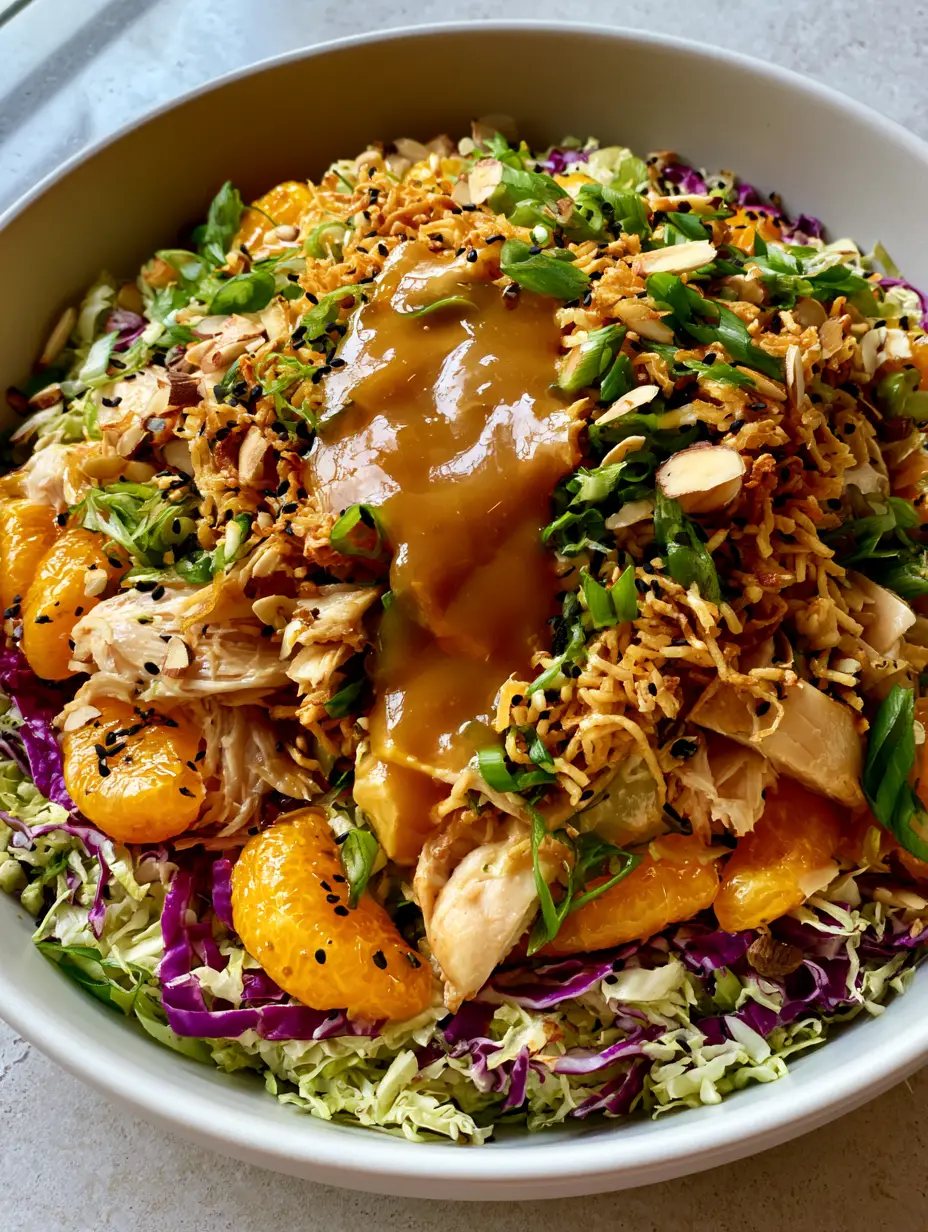
Chinese Chicken Salad with Toasted Ramen and Sesame Ginger Vinaigrette
Ingredients
Equipment
Method
- In a skillet over medium heat, toast broken ramen and slivered almonds in 1 tbsp oil until golden-brown and fragrant.
- Whisk rice vinegar, honey, soy sauce, ginger, and oils until a thick, glossy, honey-brown emulsion forms.
- Mix shredded cabbages in a wide bowl. Top with a mountain of chicken, oranges, toasted ramen, scallions, and black sesame seeds. Drizzle with dressing.
Notes
Use hand-shredded rotisserie chicken for the best texture and moisture.
Join the Radiant Dish Community
We hope this Chinese Chicken Salad brings a burst of color and crunch to your kitchen. The combination of moist chicken and toasted ramen is a proven crowd-pleaser that never goes out of style.
If you enjoyed this recipe, please leave a comment below and let us know how your “mountain of chicken” turned out! Don’t forget to share your creations on Pinterest and follow us for more vibrant, high-resolution culinary inspiration.