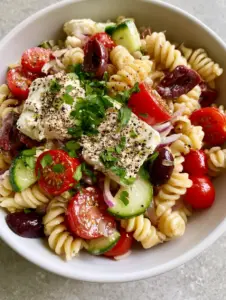
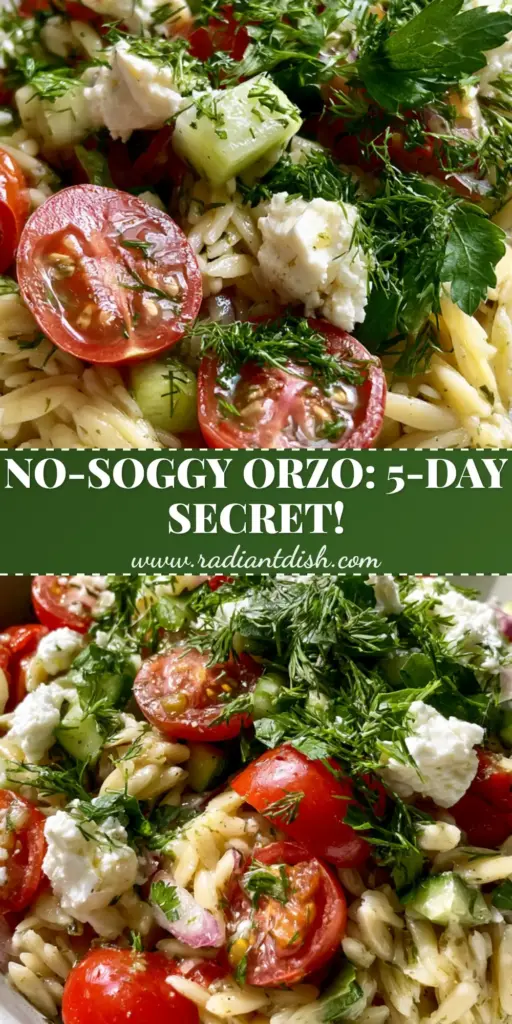
This Orzo Pasta Salad is a vibrant celebration of Mediterranean flavors, combining perfectly al dente grains of pasta with the snap of fresh vegetables and the creamy tang of feta cheese. Each bite offers a refreshing crunch from diced Persian cucumbers and the sweet acidity of halved heirloom cherry tomatoes, all tied together by a glossy, emulsified lemon vinaigrette.
Inspired by the bright, soft morning light of a seaside breakfast, this dish isn’t just a meal; it’s a sensory experience. The visual contrast between the thin red onion slivers and the heavy garnish of fresh chopped dill and flat-leaf parsley makes it a centerpiece-worthy addition to any table.
Whether you are looking for a reliable meal-prep option or a crowd-pleasing side for your next gathering, this recipe delivers on every front. It’s light yet satisfying, featuring distinct textures that hold up beautifully even after a few hours in the refrigerator.
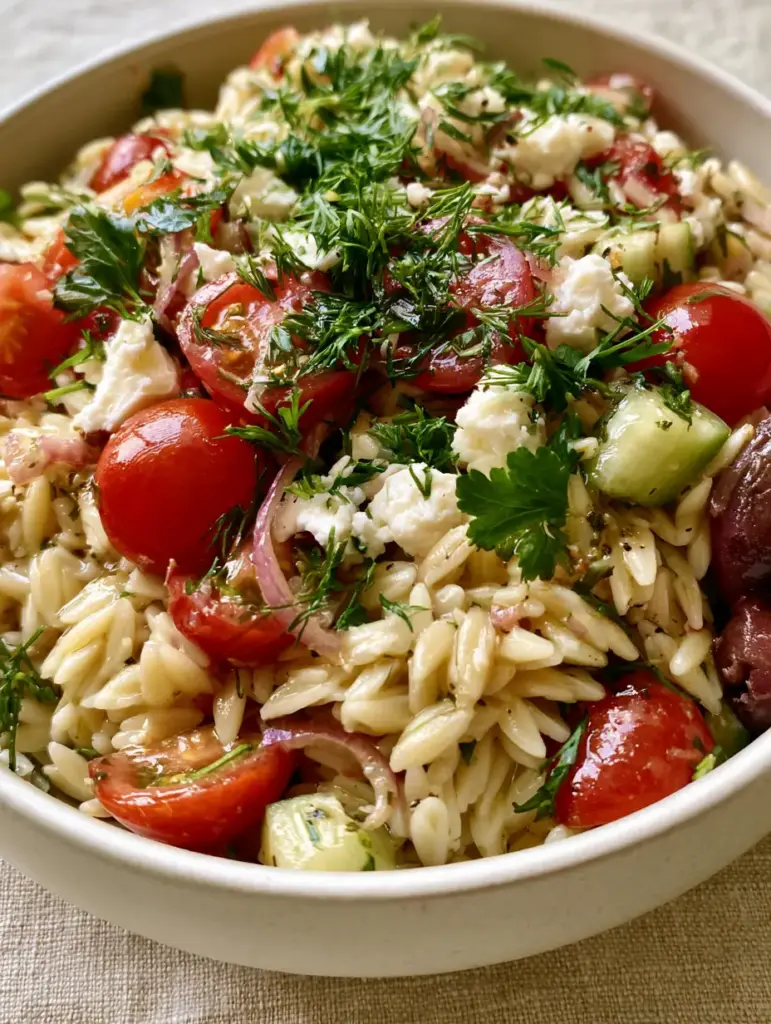
Why This Zesty Mediterranean Bowl Works
- Perfect Al Dente Texture: The orzo is cooked to a precise firm-to-the-tooth finish, ensuring each grain stays distinct and never mushy.
- High-Contrast Aromatics: The combination of fresh dill and flat-leaf parsley provides a layered herbal profile that cuts through the richness of the feta.
- Superior Emulsion: Our lemon vinaigrette is whisked into a glossy, stable emulsion that coats every ingredient without pooling at the bottom of the bowl.
- Vibrant Visual Appeal: Using heirloom cherry tomatoes and Persian cucumbers ensures a rainbow of colors and a variety of sweet and earthy notes.
The Anatomy of Zesty Freshness: Essential Ingredients
To achieve the specific macro-shot quality seen in professional food photography, we must select high-quality, foundational ingredients. Each component serves a structural and flavor-based purpose in this Orzo Pasta Salad.
The Heart of the Dish
Dry Orzo Pasta: You will need 1.5 cups (330g) of high-quality durum wheat orzo. This small, rice-shaped pasta is the ideal vessel for catching the herb-flecked vinaigrette in its tiny crevices.
Heirloom Cherry Tomatoes: Use 1 pint (250g) of tomatoes, halved longitudinally. Heirloom varieties provide a spectrum of colors—from deep purple to bright orange—that elevate the visual complexity of the dish.
Persian Cucumbers: Use 3 medium (300g) Persian cucumbers, finely diced. These are preferred over English cucumbers for their thinner skin and smaller seeds, providing a more concentrated “crunch.”
The Mediterranean Accents
Crumbled Feta Cheese: You’ll need 6 oz (170g) of high-quality sheep’s milk feta. Breaking it into large, distinct chunks rather than a fine crumble ensures the creamy texture isn’t lost among the grains of pasta.
Kalamata Olives: Include 1/2 cup (75g) of olives, pitted and sliced. These provide the essential briny, salty punch that balances the sweet tomatoes and acidic lemon.
Red Onion: One small red onion, sliced into paper-thin slivers, adds a sharp bite. To mellow the flavor, you can soak these in ice water for 5 minutes before adding them to the bowl.
The Emerald Herb Garnish
Fresh Dill & Flat-Leaf Parsley: Use 1/4 cup (10g) of each, finely chopped. These aren’t just for show; they provide the cooling, grassy notes that define a true Mediterranean pasta salad.
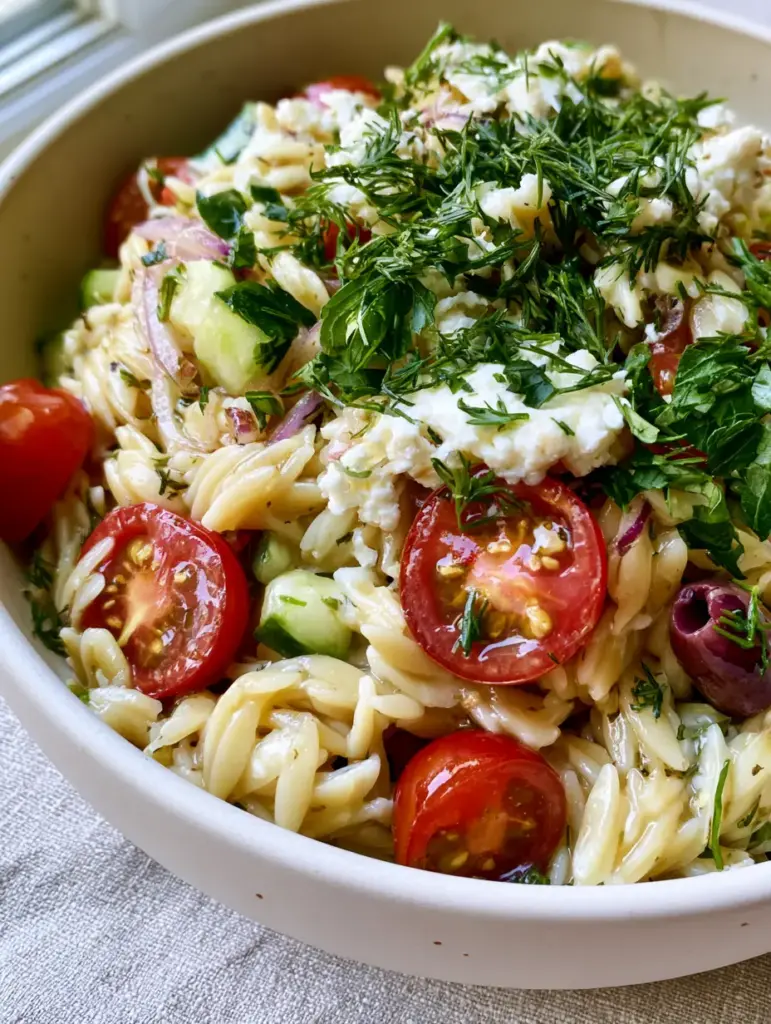
Tools for Culinary Precision
Achieving the perfect “macro shot” look requires a few specific kitchen tools. A sharp chef’s knife is non-negotiable for those clean, thin red onion slivers and uniform cucumber dice.
A large stainless steel or glass mixing bowl is essential for tossing the salad without crushing the delicate heirloom tomatoes. You will also need a high-quality whisk or a small mason jar to create the glossy, emulsified vinaigrette.
Finally, a fine-mesh strainer is superior to a standard colander for orzo. Because the pasta is so small, a standard colander might let the grains slip through or cause them to clump together as they drain.
Professional Techniques for the Perfect Orzo Base
Achieving the Al Dente Standard
Bring a large pot of water to a rolling boil and season it heavily with 1 tbsp (18g) of sea salt. The water should taste like the ocean; this is your only chance to season the pasta itself from the inside out.
Add the 1.5 cups (330g) of orzo and stir immediately to prevent the grains from sticking to the bottom. Cook for exactly 8-9 minutes, testing a grain at the 7-minute mark to ensure it still has a slight “bite” in the center.
Drain the pasta in a fine-mesh sieve and rinse briefly with cold water to stop the cooking process. Shake off all excess moisture—excess water is the enemy of a glossy, emulsified dressing.
Crafting the Glossy Lemon-Herb Emulsion
In a small bowl, combine 1/3 cup (80ml) of extra virgin olive oil, the juice of 2 large lemons (about 60ml), and 1 tsp (5g) of Dijon mustard. The mustard acts as a natural emulsifier, binding the oil and acid together into a thick, glossy liquid.
Whisk vigorously while slowly streaming in the oil, or shake in a jar until the mixture is opaque and slightly thickened. Season with 1/2 tsp (3g) of cracked black pepper and a pinch of sea salt flakes to taste.
Assembling the Ultimate Salad Bowl
Combining the Textures
Place the cooled orzo in your large mixing bowl and drizzle half of the vinaigrette over it. Toss gently so each grain is coated; this prevents the pasta from sticking together as you add the remaining ingredients.
Fold in the diced Persian cucumbers, halved heirloom tomatoes, and sliced kalamata olives. Add the thin red onion slivers, ensuring they are separated so they distribute evenly throughout the salad.
Gently fold in the feta chunks last. You want to avoid over-mixing at this stage, as the feta can start to break down and turn the dressing cloudy, ruining that “matte white ceramic bowl” aesthetic.
The Final Flourish
Shower the top of the salad with the chopped dill and flat-leaf parsley. For the most professional look, save a few sprigs of herbs and a couple of olive slices to nestle into the top just before serving.
Sprinkle a final pinch of sea salt flakes and extra cracked black pepper over the top. The salt flakes will catch the light, mirroring the “natural morning daylight” look described in our visual blueprint.
Expert Tips for Success
- Temperature Control: Never dress hot orzo. If the pasta is too warm, it will absorb the oil too quickly, leaving the salad looking dry rather than glossy.
- Herb Freshness: Only chop your dill and parsley right before serving. Pre-chopped herbs can oxidize and turn dark green or black, losing their vibrant emerald hue.
- Tomato Selection: If heirloom cherry tomatoes are out of season, grape tomatoes are a sturdy substitute, though they offer less color variety.
- The Onion Soak: If you find raw red onion too pungent, soaking the slivers in cold water for 10 minutes removes the sulfurous bite while keeping the crunch.
Creative Pairings and Serving Suggestions
This Orzo Pasta Salad is incredibly versatile and pairs beautifully with a variety of proteins. For a complete Mediterranean feast, serve it alongside grilled shrimp or lemon-oregano chicken skewers.
If you’re hosting a summer barbecue, this salad acts as a refreshing counterpoint to heavier dishes like cowboy salad or even smoked meats. The acidity of the lemon vinaigrette cleanses the palate perfectly.
For a vegetarian lunch, pair a large scoop of this salad with a side of cucumber feta salad for double the crunch. It also travels well, making it a stellar addition to a snackle box for beach days or park picnics.
Frequently Asked Questions
Yes, this salad is excellent for meal prep. However, the orzo will absorb the dressing as it sits. If making more than 4 hours in advance, reserve half the dressing and toss it in just before serving to maintain the glossy texture.
If you don’t like feta, goat cheese or small pearls of fresh mozzarella work well, though you will lose the specific salty tang that feta provides to this Mediterranean profile.
To prevent clumping, rinse the cooked orzo briefly under cold water to remove excess starch. Then, toss it with a small amount of olive oil or the vinaigrette immediately after draining.
Standard orzo is made from wheat flour and contains gluten. For a gluten-free version, look for orzo made from cassava or rice flour, though cooking times may vary.
For the best texture and visual appeal, slice the red onion against the grain into paper-thin slivers. You can use a mandoline for perfect uniformity.
The Perfect Orzo Pasta Salad Recipe
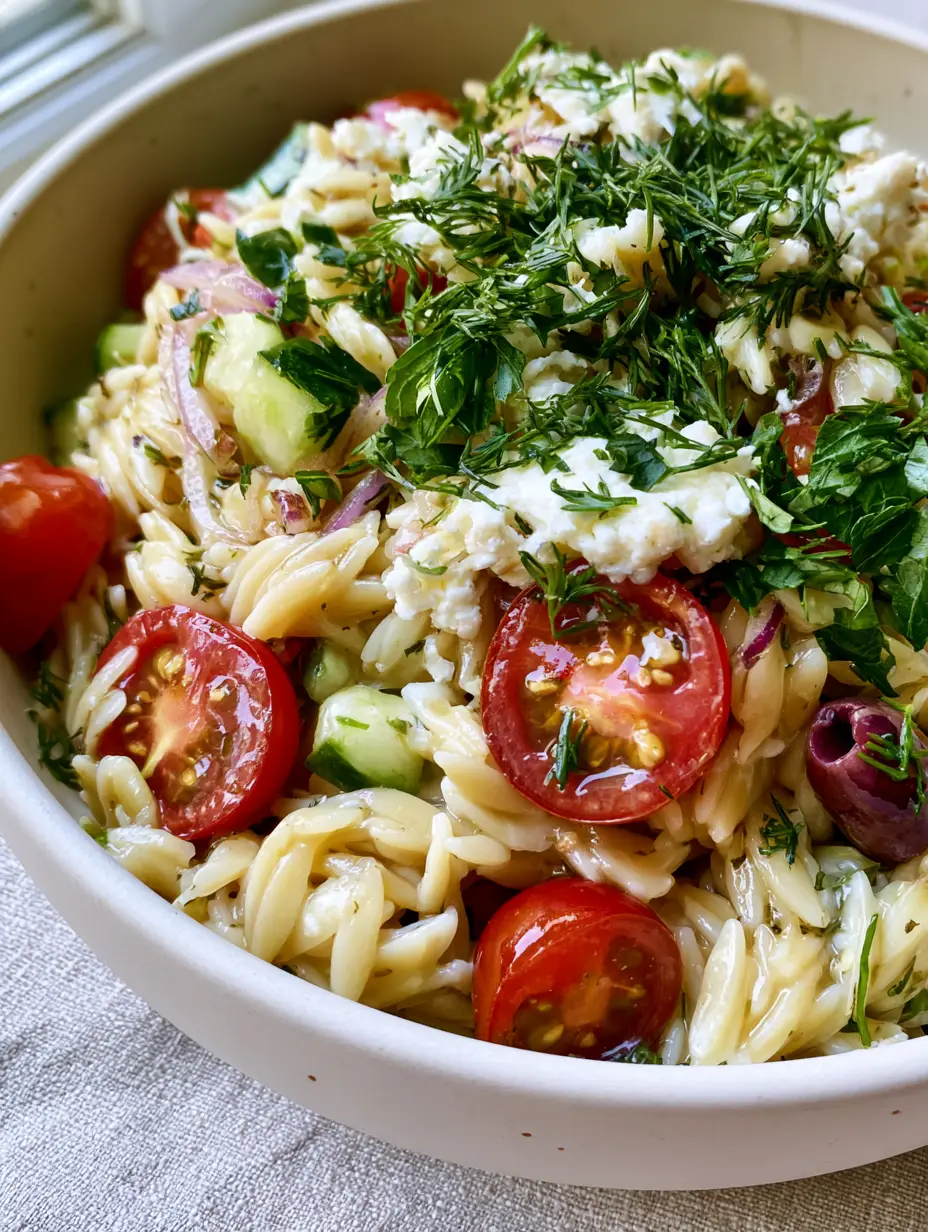
Orzo Pasta Salad with Lemon Herb Vinaigrette and Feta
Ingredients
Equipment
Method
- Bring a large pot of salted water to a boil. Add the orzo and cook for 8-9 minutes until al dente.
- Drain in a fine-mesh sieve and rinse with cold water. Shake well to remove all excess moisture.
- Whisk together lemon juice, Dijon mustard, salt, and pepper. Slowly stream in olive oil while whisking until a glossy emulsion forms.
- In a large bowl, toss the cooled orzo with half the dressing. Fold in the tomatoes, cucumbers, olives, and red onion slivers.
- Add the crumbled feta chunks and fresh herbs. Drizzle with remaining dressing and toss very gently to combine without breaking the feta.
- Finish with an extra sprinkle of cracked black pepper and sea salt flakes before serving.
Notes
If making ahead, reserve half the dressing to add just before serving as the pasta will absorb liquid over time.
Closing & Call to Action
Mastering the Orzo Pasta Salad is a rite of passage for any home cook looking to elevate their side dish game. The combination of al dente pasta, crisp vegetables, and that signature lemon-herb emulsion creates a dish that is as beautiful to look at as it is delicious to eat.
If you enjoyed this recipe, please leave a comment below and let us know how yours turned out! Don’t forget to share your creations on social media and follow us on Pinterest for more culinary inspiration and visual recipe blueprints.