When you think of the perfect weekend morning, nothing compares to the aroma of sizzling butter and warm cinnamon wafting from the kitchen. These French Toast ideas are designed to elevate your standard breakfast routine into a five-star gourmet experience. We aren’t just making soggy bread; we are creating a culinary masterpiece with a crunchy, caramelized exterior and a center so creamy it mimics a delicate custard. This recipe focuses on the structural integrity of thick-cut brioche, ensuring every bite provides a textural contrast that will leave your family begging for seconds.
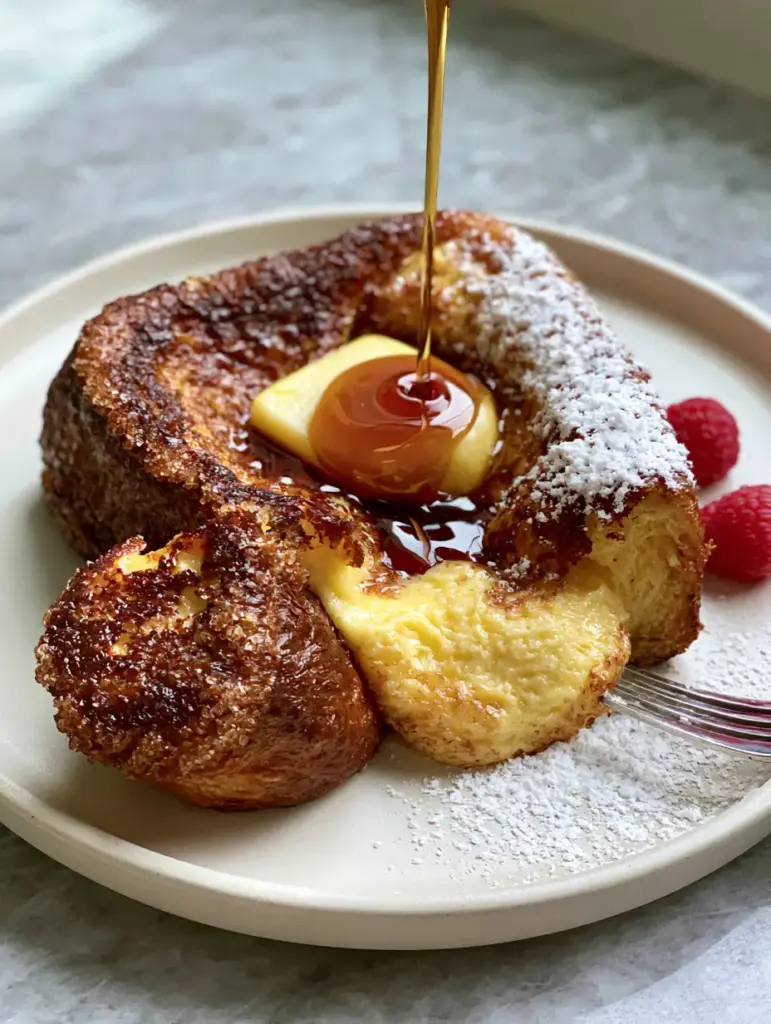
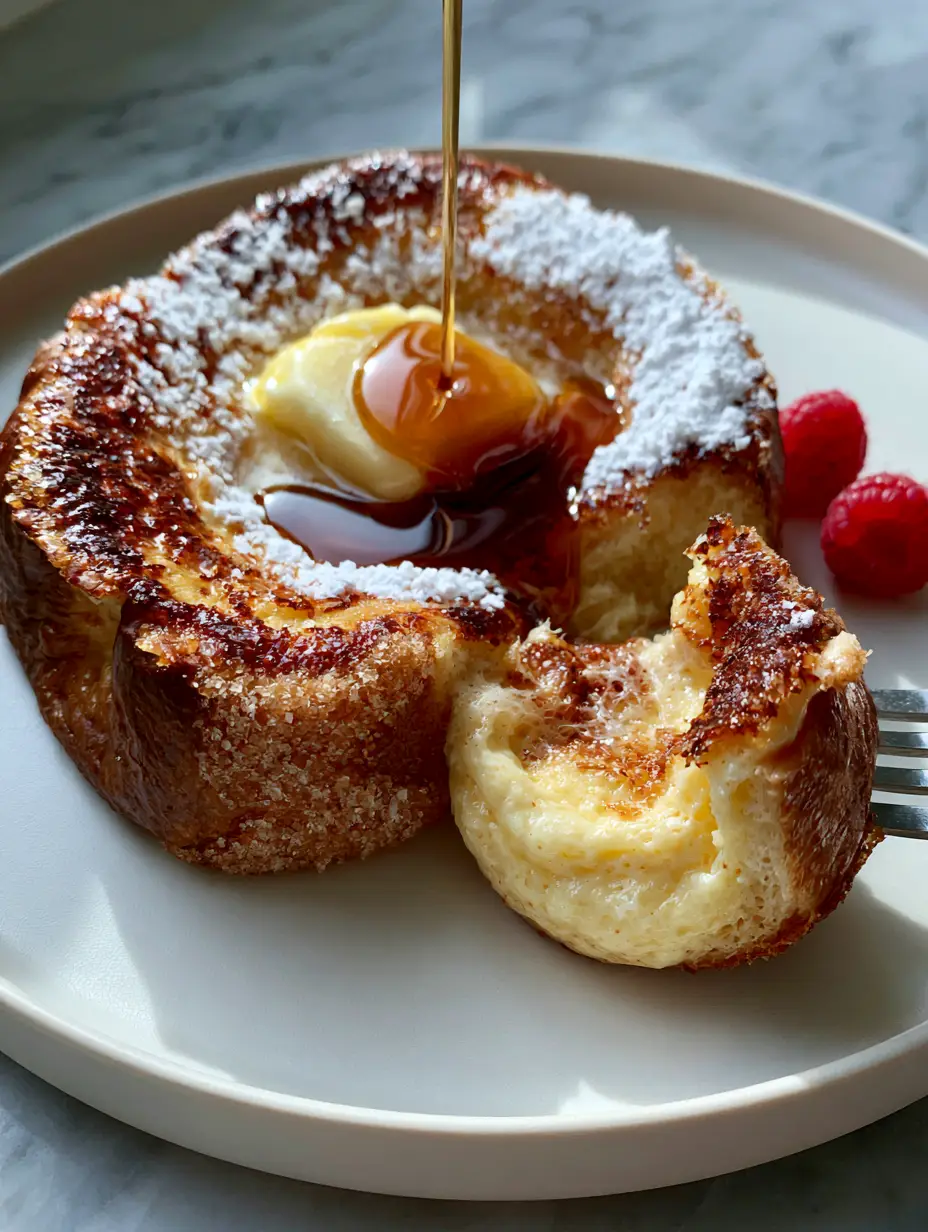
The visual appeal is just as important as the flavor profile. Imagine a single, ultra-thick slice of golden-brown brioche, its edges shimmering with crystallized sugar, topped with a melting pat of salted butter and a cascading waterfall of amber maple syrup. The inclusion of fresh red raspberries adds a vibrant pop of color and a tart brightness that cuts through the richness of the custard. Whether you are hosting a festive brunch or looking for pancake ideas to diversify your morning menu, this French toast method is the definitive gold standard for home cooks.
The Architecture of the Perfect Thick-Cut Slice
To achieve the result seen in professional food photography, you must start with the right foundation. Not all bread is created equal when it comes to absorbing custard without falling apart. For these French Toast ideas, we exclusively recommend a high-quality Brioche loaf. Brioche is an enriched bread, meaning it contains a higher percentage of egg and butter, giving it a sturdy yet airy crumb that acts like a sponge for your custard mixture.
Standard sandwich bread is far too thin and flimsy for this application. You want to aim for a thickness of at least 1.5 inches (3.8cm) to 2 inches (5cm). This thickness is what allows the exterior to become deeply caramelized and crunchy while the interior stays soft, steaming, and pale-yellow—just like a high-end bread pudding. If you have extra berries left over, they also pair beautifully with a triple berry lemonade for a complete brunch spread.
Essential Components for a Custard-Like Interior
Thick-Cut Brioche Bread: The star of the show; its dense yet fluffy structure is essential for holding the heavy custard without becoming mushy or disintegrating during the soak.
Heavy Cream (240ml) and Whole Milk (120ml): We use a specific ratio of cream to milk to ensure the interior is rich and velvety rather than watery. The fat content in the cream is what creates that “steaming, creamy” center described in our visual blueprint.
Large Room-Temperature Eggs: Eggs provide the structural protein that sets the custard as it cooks. Using room-temperature eggs ensures the fats in the milk and cream don’t clump up during whisking.
Granulated Sugar and Cinnamon: While the syrup provides sweetness later, adding sugar to the custard is what facilitates the Maillard reaction, resulting in those “deep golden-brown, caramelized, crunchy edges.”
Pure Vanilla Extract and Sea Salt: Vanilla provides the floral aroma that defines classic French toast, while a pinch of salt in the custard balances the sugar and enhances the natural buttery notes of the brioche.
Salted Yellow Butter: Specifically used for the finishing pat. The saltiness of the butter melting into the sweet amber maple syrup creates a complex flavor profile that unsalted butter simply cannot match.
Fresh Red Raspberries: These provide the necessary acid to balance the dish. Their bright red hue against the minimalist off-white plate creates the high-quality social media aesthetic we are targeting.
Professional Tools for Gourmet Results
Achieving the perfect sear requires the right equipment. A heavy-bottomed cast iron skillet or a non-stick griddle is preferred. The even heat distribution of cast iron is secret to those visible sugar crystallizations on the crust. You will also need a shallow wide-bottomed bowl for soaking the thick slices—ensure it is wide enough so you aren’t squeezing the bread and ruining its shape.
A thin metal spatula is also highly recommended. Since the bread is thick and heavy with custard, you need a tool that can slide easily underneath the crust without tearing the delicate, caramelized surface. If you are looking for other hearty meal inspirations, consider checking out our ground beef bowl recipes for a savory contrast to this sweet breakfast.
Mastering the Golden Custard Soak
Preparing the Enriched Batter
Start by whisking 3 large eggs in a wide, shallow dish until no streaks of white remain. Slowly pour in 1 cup (240ml) of heavy cream and 1/2 cup (120ml) of whole milk. Whisking constantly, add 2 tablespoons (25g) of granulated sugar, 1 tablespoon (15ml) of vanilla extract, and 1 teaspoon (2.6g) of ground cinnamon.
The key here is emulsification. You want the fat and the eggs to become one cohesive liquid. This ensures that every millimeter of the brioche is infused with flavor, preventing a “dry spot” in the middle of your thick slice. If you enjoy this level of decadence, you might also like our peach cobbler cinnamon rolls.
The Science of the Timed Soak
Because we are using ultra-thick slices, a quick dip won’t suffice. Place a single slice of brioche into the custard and let it sit for exactly 60 seconds per side. Use a fork to gently press down on the center; you want the bread to feel heavy and saturated but not so wet that it breaks when lifted.
This timing is crucial. If you soak for too short a time, the center will just be dry bread. If you soak for too long, the brioche will lose its structural integrity and turn into mush in the pan. We are looking for that specific “fluffy and not wet” interior mentioned in our visual prompt.
Achieving the Perfect Caramelized Crust
Temperature Control and Searing
Heat your skillet over medium-low heat. Add 1 tablespoon (14g) of unsalted butter and a tiny drop of neutral oil. The oil raises the smoke point of the butter, allowing you to sear for longer without burning the milk solids. Once the butter is foaming, place the soaked brioche in the center.
Do not rush this process. The thick slice needs time for the heat to penetrate the center and set the custard while the exterior undergoes caramelization. Cook for 4-5 minutes per side. You are looking for a deep golden-brown color and a visible “crunchy edge” where the sugar in the custard has crystallized against the heat of the pan.
The Finishing Touches
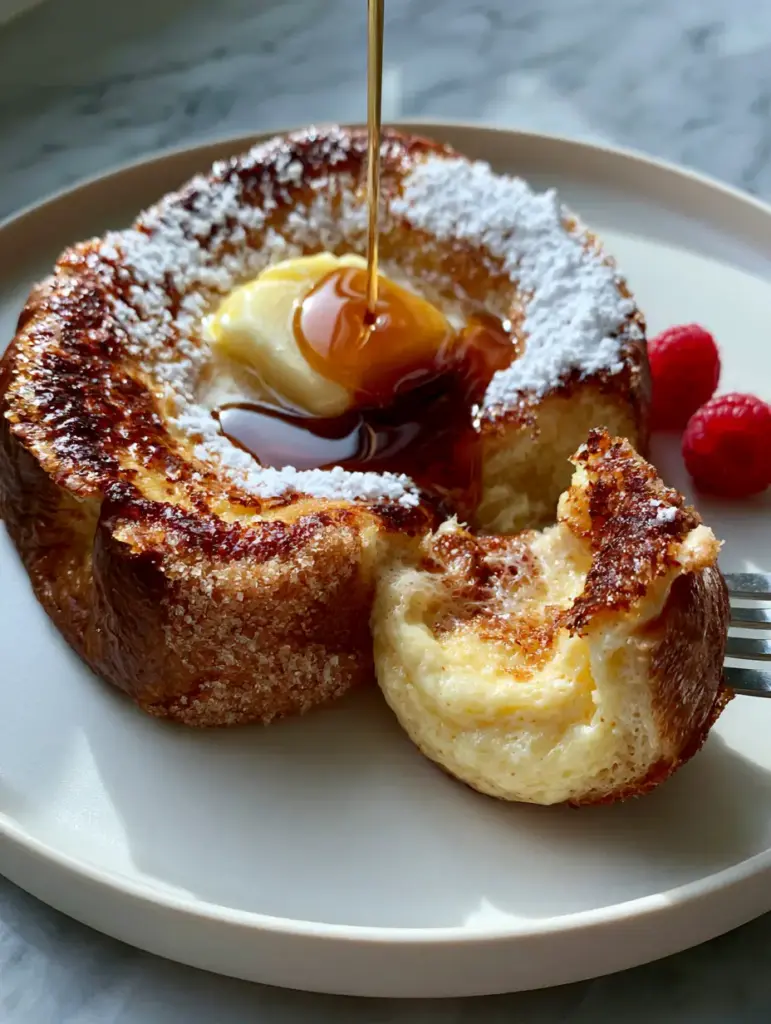
Once the toast is cooked through and the edges are crisp, transfer it to a minimalist off-white plate. Immediately place a large pat of salted yellow butter in the center so it begins to melt from the residual heat. Dust the entire slice with a fine “snow-like” layer of powdered sugar using a fine-mesh sieve.
Slowly pour the amber maple syrup over the butter, capturing that “mid-drip” moment. Finally, place two bright red raspberries on the side. The contrast of the red fruit against the golden toast and the grey marble countertop provides the perfect “authentic social media” look that makes these French Toast ideas so popular.
Expert Tips for French Toast Success
- Stale is Better: If your brioche is too fresh, it will be too soft. Leave the slices out on a wire rack overnight to dry out slightly. This allows them to absorb more custard without becoming soggy.
- The Oven Finish: If you find your crust is getting too dark but the center isn’t fully set (still “wet”), pop the slices into a 350°F (175°C) oven for 5 minutes to finish cooking the interior custard.
- Use Salted Butter for Topping: While we cook with unsalted butter to control the salt levels, the finishing pat MUST be salted. The salt crystals cut through the sugar of the maple syrup, creating a professional flavor profile.
- Control the Sieve: For that “fine snow-like dusting” of powdered sugar, hold your sieve at least 12 inches above the plate. This ensures an even, light distribution rather than clumps.
Storage, Reheating, and Freezing
While these French Toast ideas are best served fresh, you can store leftovers in an airtight container in the refrigerator for up to 2 days. To reheat, avoid the microwave, as it will make the caramelized crust rubbery. Instead, use a toaster oven or a dry skillet over medium heat to restore the exterior crunch.
To freeze, let the slices cool completely on a wire rack. Wrap each slice individually in plastic wrap and then place them in a freezer-safe bag for up to 2 months. Reheat directly from frozen in a 350°F (175°C) oven for 10-12 minutes until the center is steaming and the edges are crisp again. For more easy meal prep, see our easy dinner ideas.
What to Serve With Indulgent French Toast
To balance the sweetness of this dish, consider serving it alongside savory protein options. Crispy thick-cut bacon or savory breakfast sausages provide a necessary salty counterpoint. If you are serving this as part of a larger brunch, it pairs excellently with a fresh fruit salad or even a side of fluffy pancakes for those who can’t decide between the two.
If you’re transitioning from a late brunch into a light afternoon, these French Toast ideas can be followed by something refreshing like a coconut chicken rice bowl to round out your daily nutrition. The versatility of brioche makes it a staple in any kitchen.
Frequently Asked Questions
Yes, you can substitute heavy cream and milk with full-fat coconut milk or cashew milk, though the flavor profile will change slightly. Use a dairy-free butter substitute for searing.
While you can use only milk, heavy cream provides the fat necessary to create that signature creamy, custard-like interior that doesn’t feel ‘wet’ or watery.
Brioche or Challah are the best choices because their high egg and butter content allows them to absorb custard while remaining structurally sound. Avoid thin sandwich bread.
Sogginess usually occurs if the heat is too high, causing the outside to brown before the custard inside sets, or if the bread was soaked for too long. Try lower heat or finishing the toast in a 350°F (175°C) oven for 5 minutes.
The Ultimate Brioche French Toast Recipe
[Image-3]
French Toast Ideas for the Ultimate Thick-Cut Brioche Breakfast
Ingredients
Equipment
Method
- In a wide, shallow bowl, whisk the eggs until no streaks remain. Incorporate the heavy cream, whole milk, granulated sugar, vanilla, and cinnamon until the mixture is fully emulsified.
- Place the thick slices of brioche into the custard. Let them soak for 60 seconds per side until they feel heavy and saturated but maintain their shape.
- Heat a skillet over medium-low heat with unsalted butter. Add the soaked bread and cook for 4-5 minutes per side until a deep golden-brown, caramelized crust forms.
- Transfer to a plate. Top with a pat of salted butter, a dusting of powdered sugar, a drizzle of maple syrup, and fresh raspberries.
Notes
If the exterior browns too fast, finish the slices in the oven at 350°F (175°C) for 5 minutes.

Closing & Call to Action
Mastering these French Toast ideas is about more than just a recipe; it’s about understanding the harmony between a crunchy, caramelized crust and a soft, custard-like center. By using thick-cut brioche and following our specific soaking and searing techniques, you can recreate this social-media-worthy breakfast in your own kitchen. Don’t forget to use fresh raspberries and salted butter to achieve that perfect flavor balance.
If you loved this recipe, please leave a comment below and let us know how your caramelization turned out! Be sure to follow us on Pinterest for more gourmet breakfast inspiration and share your creations using our hashtag. For more delicious ideas, check out our quick recipes section for your busy weekday mornings.