When you think of the perfect Steak dinner, your mind likely drifts to a high-end steakhouse where the meat arrives sizzling, bathed in a pool of aromatic butter. There is a specific sensory magic in that moment—the scent of toasted garlic, the visual of a deep mahogany crust, and the sound of fat rendering against hot metal. This recipe brings that exact professional experience into your home kitchen, utilizing a heavy cast iron skillet to achieve a crust that rivals any five-star establishment.
The beauty of these garlic butter steak bites lies in the contrast of textures. You are aiming for a high-heat sear that creates a charred, salty exterior while maintaining a tender, juicy center. By cutting the sirloin into uniform cubes, we increase the surface area available for browning, meaning every single bite is packed with the intense flavor of the Maillard reaction. This is not just a meal; it is a masterclass in heat management and flavor layering.
The Science of the Perfect Mahogany Crust
Achieving a restaurant-quality Steak dinner at home requires understanding the relationship between moisture and heat. If your steak is damp when it hits the pan, it will steam rather than sear, resulting in a grey, unappetizing exterior. We combat this by meticulously patting the meat dry and seasoning it with coarse sea salt, which helps draw out surface moisture before it even touches the skillet.
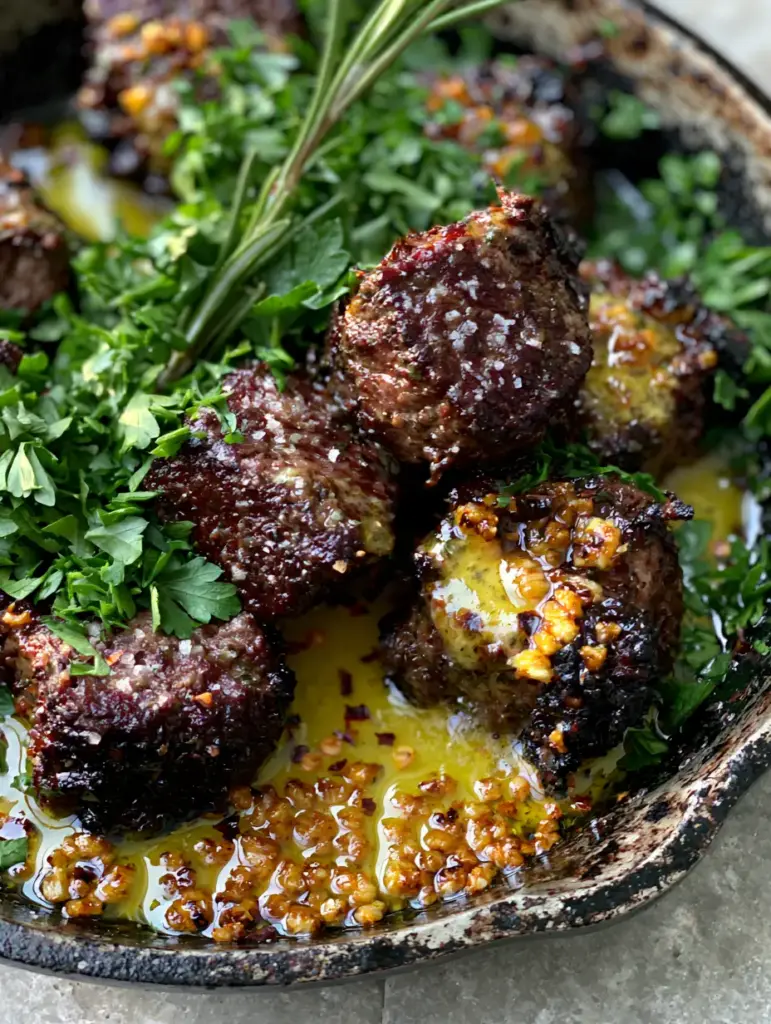
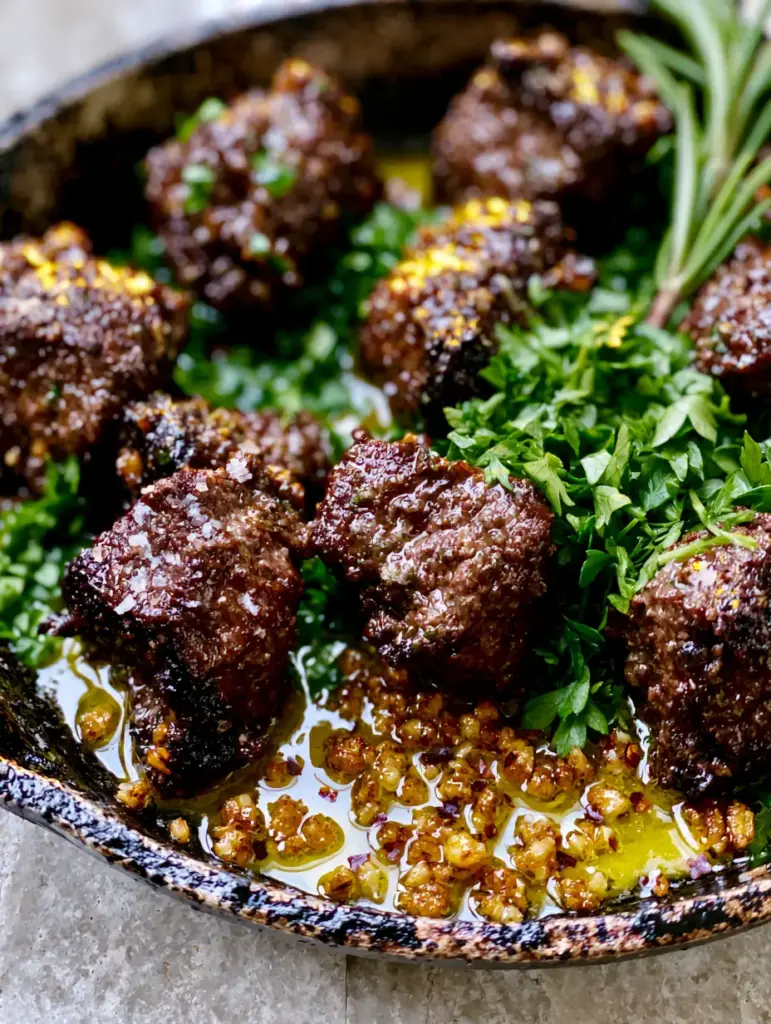
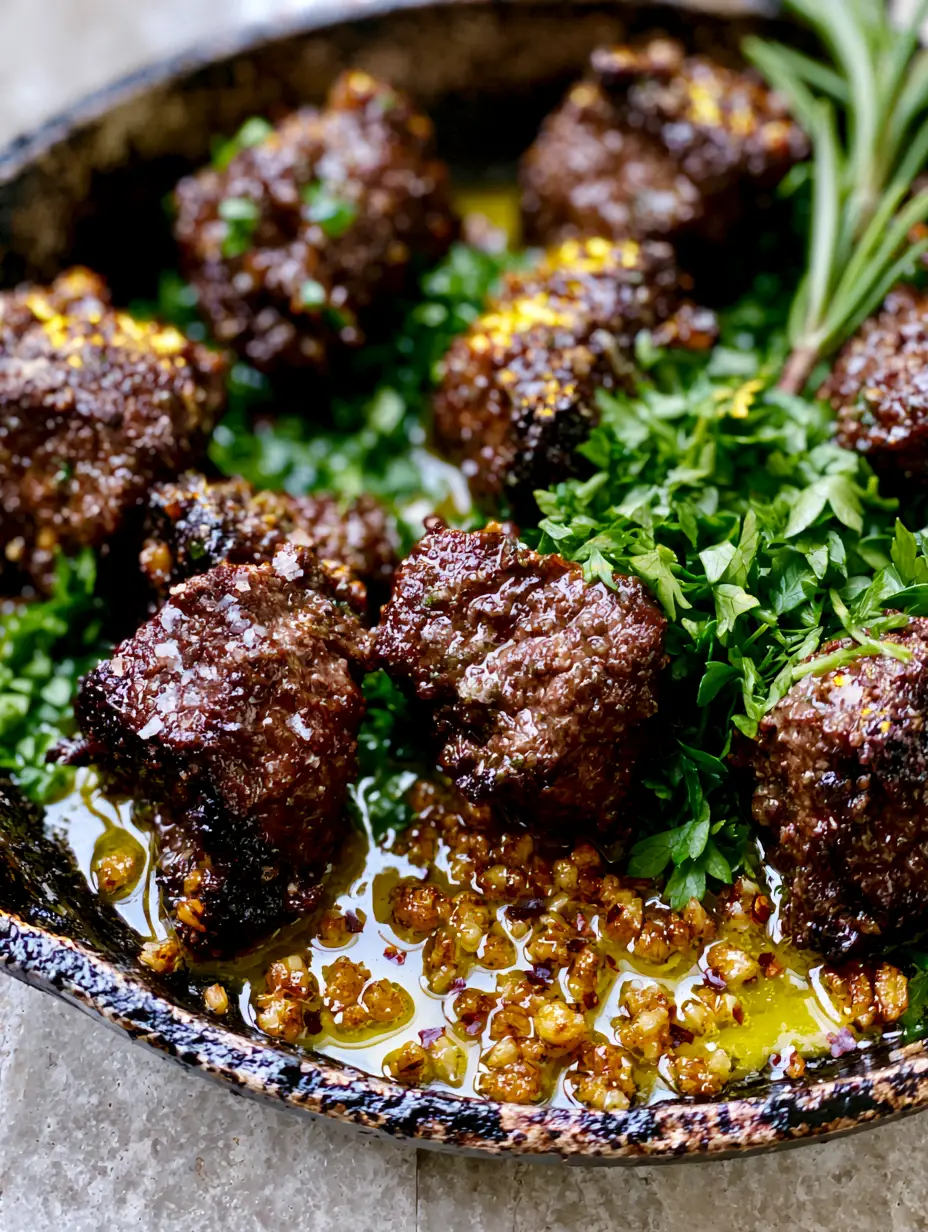
The “mahogany crust” mentioned in our visual blueprint is the result of the Maillard reaction—a chemical reaction between amino acids and reducing sugars that gives browned food its distinctive flavor. To achieve this, we use a cast iron skillet, which has incredible heat retention. Unlike thin stainless steel, cast iron won’t drop in temperature when the cold meat is added, ensuring the sear begins the microsecond of contact.
Essential Components for a Five-Star Steak Dinner
- Top Sirloin Steak: This cut is the ideal balance of lean protein and beefy flavor. It holds its shape perfectly when cubed and becomes incredibly tender when seared quickly over high heat.
- Unsalted Butter: We use unsalted butter to maintain total control over the seasoning. As the butter melts and foams, it picks up the flavors of the garlic and rosemary, creating a “thick, golden-yellow herb butter sauce” that glazes every morsel.
- Fresh Minced Garlic: Avoid the jarred variety at all costs. Freshly minced garlic provides those “tiny, crispy golden-browned bits” that add a nutty, savory crunch to the dish.
- Rosemary and Parsley: The rosemary sprig is used for infusing the butter during the basting process, while the vibrant green flat-leaf parsley is added at the very end to provide a fresh, herbaceous lift that cuts through the richness of the fat.
- Red Pepper Flakes: These add a subtle, background heat that wakes up the palate without overpowering the natural flavor of the beef.
The Tool of the Trade: Why Cast Iron Matters
You cannot achieve the specific “cast iron skillet texture” described in our visual guide without the actual tool. A seasoned black cast iron skillet acts as a heat reservoir. It radiates an even, intense heat that allows for charred edges and a consistent sear across all steak cubes simultaneously.
If you are looking for other ways to utilize your skillet for a Steak dinner, you might also enjoy experimenting with thinly sliced ribeye steak recipes which benefit from the same high-heat environment. The iron also contributes to the “rustic” aesthetic that makes this dish look as good as it tastes, providing a dark, textured backdrop for the glistening meat and golden garlic.
Precision Preparation: Step-by-Step Instructions
Phase 1: Tempering and Drying the Meat
Remove your 1.5 lbs (680g) of sirloin steak from the refrigerator at least 30 minutes before cooking. Bringing the meat to room temperature ensures that the center won’t remain cold while the outside chars. Use paper towels to pat the steak completely dry on all sides before cutting it into 1-inch (2.5cm) cubes.
Phase 2: The Initial Sear
Heat 2 tbsp (30ml) of high-smoke point oil (like avocado or grapeseed oil) in your cast iron skillet over high heat until it just begins to shimmer and smoke. Add the steak cubes in a single layer, ensuring they are not crowded. Let them sit undisturbed for 2 minutes to develop that deep mahogany crust. Toss and sear for another 2 minutes until charred edges appear on all sides.
Phase 3: The Garlic Butter Infusion
Reduce the heat to medium-high and add 4 tbsp (57g) of unsalted butter to the skillet along with a fresh rosemary sprig and 4 cloves of minced garlic. As the butter melts and begins to foam, use a large spoon to continuously baste the steak bites. You are looking for the garlic to turn a “crispy golden-brown” without burning. This process should take about 2-3 minutes.
Phase 4: Finishing Touches
Turn off the heat. Sprinkle 1/2 tsp (1g) of dried red pepper flakes, a generous pinch of coarse sea salt, and a crack of fresh black pepper over the dish. Finally, toss in 1/4 cup (15g) of freshly chopped flat-leaf parsley. The residual heat will soften the parsley and release its oils without wilting it completely, maintaining that “vibrant green” look.
Expert Tips for a Flawless Steak Dinner
- Don’t Overcrowd the Pan: If you add too much meat at once, the temperature of the skillet will drop, and the steak will release juices and boil instead of searing. Cook in batches if necessary.
- Watch the Garlic: Garlic can turn from golden and sweet to black and bitter in seconds. If the skillet is too hot after the sear, take it off the flame for 30 seconds before adding the butter and garlic.
- Use Coarse Salt: The “visible salt flakes” in the visual prompt are achieved by using a high-quality coarse sea salt or kosher salt. Fine table salt will dissolve too quickly and won’t provide the same textural pop.
- Resting is Key: Even small steak bites benefit from a 2-3 minute rest. This allows the fibers to relax and reabsorb the golden-yellow herb butter sauce.
Elevating Your Meal: What to Serve
While these steak bites are the star of the show, a complete Steak dinner often involves a few complementary sides. For a low-carb option, these bites pair beautifully with a chicken zucchini stir-fry or a simple roasted cauliflower. If you want something heartier, serve them over a bed of creamy mashed potatoes or alongside a coconut chicken rice bowl for a unique fusion experience.
If you find yourself with leftovers—though that is rare—these bites are incredible when tucked into a toasted baguette for a steak sandwich recipe. The garlic butter acts as a built-in sauce for the bread, making for an elite lunch the next day.
Strategic Storage and Reheating
To maintain the integrity of your Steak dinner, store any leftovers in an airtight container in the refrigerator for up to 3 days. When reheating, avoid the microwave, which will turn the steak rubbery. Instead, place the bites back in a skillet over medium heat with a tiny splash of water or a small knob of butter. Cover the pan for 2 minutes to gently steam them back to temperature without losing the crust.
You can, but you must reduce the amount of added coarse sea salt at the end. Unsalted butter is preferred by chefs because it allows for precise control over the final seasoning.
Add the garlic only after the steak has been seared and the heat has been slightly reduced. The butter helps buffer the garlic, and the basting process keeps the garlic moving so it browns evenly.
Top sirloin is the best choice because it is lean, flavorful, and holds its shape well when cubed. Ribeye is also excellent if you prefer a higher fat content and more marbling.
Cast iron retains heat better than any other material, which is essential for creating the deep mahogany crust and charred edges without overcooking the inside of the steak bites.
Tempering, or bringing the steak to room temperature, ensures that the meat cooks evenly. If the steak is too cold, the exterior will overcook before the interior reaches the desired temperature.
The Master Recipe: Garlic Butter Steak Bites
Steak Dinner: The Ultimate Garlic Butter Steak Bites in a Cast Iron Skillet
Ingredients
Equipment
Method
- Pat the sirloin steak completely dry with paper towels. Cut into 1-inch (2.5cm) cubes and allow to temper at room temperature for 30 minutes.
- Heat oil in the cast iron skillet over high heat. Add steak in a single layer and sear for 2 minutes undisturbed to develop a mahogany crust. Toss and sear for 2 more minutes.
- Reduce heat to medium-high. Add butter, rosemary, and minced garlic. Spoon the foaming butter over the steak for 2-3 minutes until garlic is crispy and golden.
- Remove from heat. Discard rosemary sprig. Toss with parsley, red pepper flakes, sea salt, and black pepper. Rest for 3 minutes before serving.
Notes
Do not crowd the pan; sear in batches if necessary for a true mahogany finish.
Closing Thoughts on the Ultimate Steak Dinner
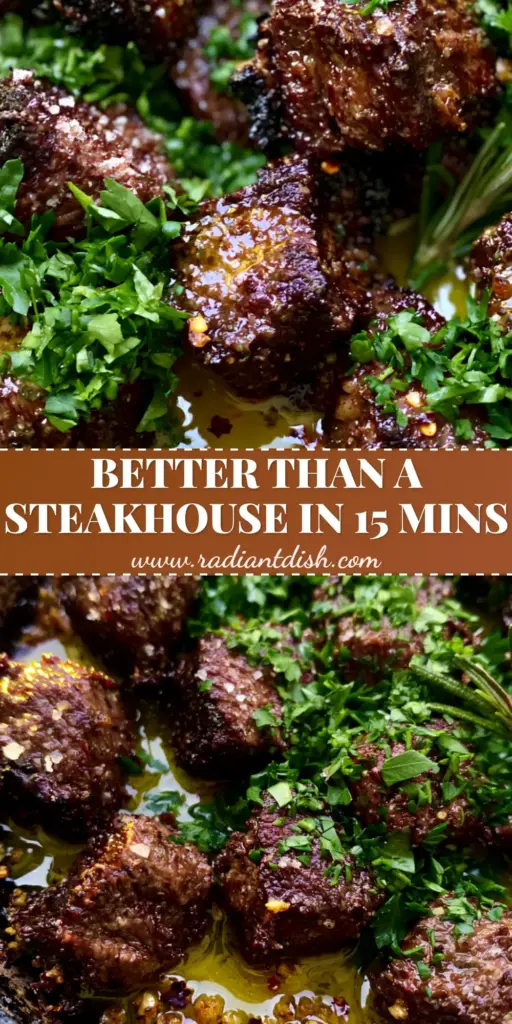
Mastering the Steak dinner is a rite of passage for every home cook. By focusing on the visual cues—the mahogany crust, the shimmering butter, and the crispy garlic—you ensure a result that is as beautiful as it is delicious. We invite you to share your results and tag us on social media. For more visual inspiration, be sure to follow our Pinterest boards for daily recipe ideas.