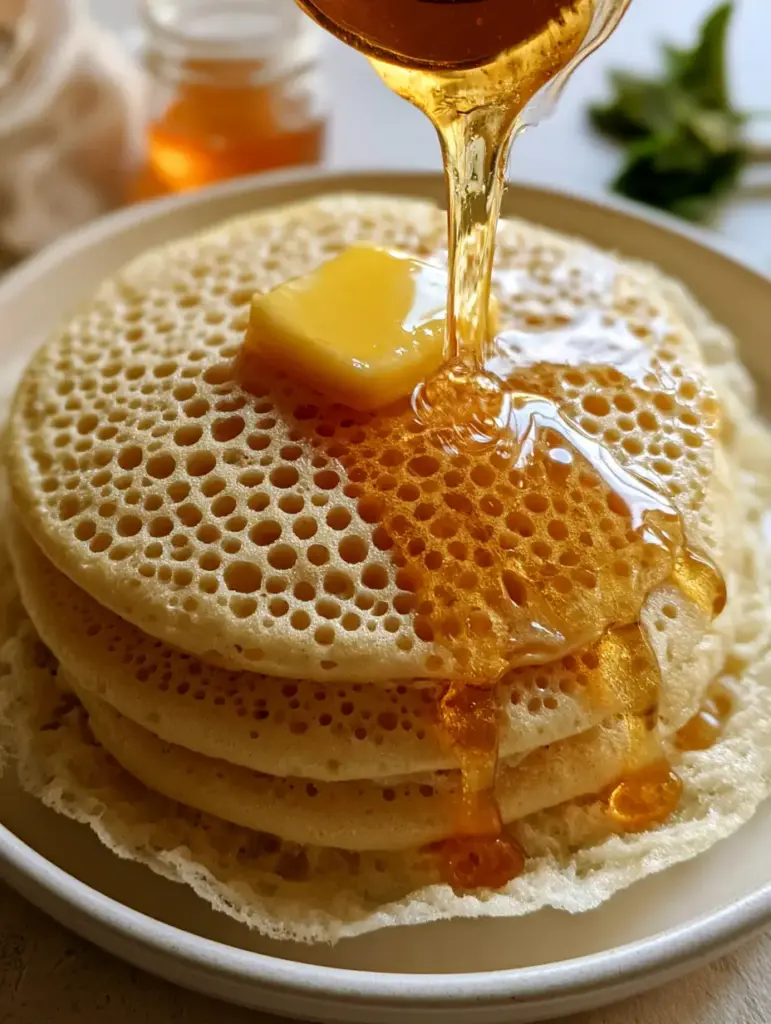
African crepes, specifically the famous Moroccan Baghrir, are a visual and culinary masterpiece that will completely transform your breakfast routine. Unlike traditional French crepes, these African crepes are made from a semolina-based batter and are cooked only on one side. This unique process creates a surface covered in thousands of tiny, delicate “eyes” or pores that are specifically designed to soak up every drop of a thick, golden honey-butter glaze.
When you first witness the magic of African crepes bubbling in the pan, you’ll realize they are more than just a meal—they are a sensory experience. The aroma of blooming yeast mixed with the nutty scent of toasted semolina fills the kitchen, promising a texture that is simultaneously spongy, light, and incredibly satisfying. Whether you are looking for new savory snack ideas or a sweet showstopper, these pancakes are the answer.
Why You Will Obsess Over These Spongy Thousand-Hole Crepes
- The Ultimate Syrup Traps: The signature “thousand holes” act as tiny reservoirs for the melted honey and butter.
- Unbelievably Light Texture: The combination of fine semolina and yeast creates a cloud-like crumb that is never heavy.
- Naturally Vegan-Friendly: The base batter is dairy-free and egg-free, making it accessible for various dietary needs.
- No-Flip Convenience: Say goodbye to the stress of flipping! These African crepes cook entirely on one side.
- Stunning Visual Appeal: The pale golden hue contrasted with a glossy amber glaze makes this a Pinterest-perfect dish.
The Essential Ingredients for Perfect African Crepes
To achieve the authentic “honeycomb” look of African crepes, you need a specific balance of leavening agents and grain textures. Every ingredient serves a structural purpose in creating those iconic bubbles.
Fine Semolina: This is the heart of the recipe. Fine semolina (not coarse) provides the characteristic golden color and a slightly chewy, nutty structure that holds the holes open. It’s a staple in many Mediterranean mezze bowl cultures.
All-Purpose Flour: A small amount of white flour helps provide the elasticity needed to prevent the crepes from tearing when you lift them from the pan.
Active Dry Yeast: This is the primary engine for the “thousand holes.” The yeast ferments the batter, creating the initial air pockets.
Baking Powder: Working in tandem with the yeast, baking powder provides a secondary “lift” the moment the batter hits the hot pan, ensuring the surface is highly porous.
Warm Water: It must be exactly 105°F-115°F (40°C-46°C) to activate the yeast without killing it. Warmth is the catalyst for the lacy texture.
Salt and Sugar: A pinch of each balances the flavors and helps the edges of the African crepes achieve that soft, lacy finish.
Honey and Salted Butter: This duo forms the traditional glaze. The honey provides a thick, amber sweetness, while the salted butter adds a necessary savory counterpoint.
Step-by-Step: Mastering the Baghrir Technique
Creating African crepes is a science. If you follow these steps precisely, you will see the “eyes” form right before your own eyes. It is as satisfying to watch as making fluffy dessert recipes.
1. Blending for Maximum Aeration
In a high-speed blender, combine 2 cups (320g) of fine semolina, 1 cup (125g) of all-purpose flour, 1 tablespoon (12g) of sugar, 1 teaspoon (6g) of salt, and 1 tablespoon (9g) of yeast. Pour in 3 cups (720ml) of warm water. Blend on high for 2 full minutes. You want the batter to be completely smooth and filled with tiny bubbles. Do not skip the blending time; it develops the gluten just enough to hold the bubbles.
2. The Secondary Lift
Add 2 teaspoons (10g) of baking powder to the blender and pulse for 5 seconds. Pour the batter into a large bowl. Cover it with a clean kitchen towel and let it rest in a warm, draft-free spot for 30 minutes. You will know it is ready when the surface looks foamy and fermented.
3. Preparing the Non-Stick Surface
Heat a high-quality non-stick skillet over medium heat. Do not use oil or butter on the pan—African crepes require a dry non-stick surface to allow the bubbles to climb the sides of the crepe. If your pan is too hot, the bottom will burn before the holes form; if it is too cold, the holes won’t open.
4. The No-Flip Pour
Stir the batter gently. Pour about 1/3 cup (80ml) of batter into the center of the pan. Do not swirl the pan like a French crepe. Let the batter spread naturally into a circle. Watch closely: within seconds, hundreds of tiny holes will begin to pop on the surface, starting from the edges and moving toward the center.
5. Identifying Readiness
The African crepes are done when the top surface no longer looks “wet” or shiny and is completely covered in holes. This usually takes about 2 minutes. The bottom should be a very pale golden color, never dark brown. Transfer the finished crepe to a clean plate in a single layer. Never stack hot Baghrir or they will stick together and ruin the delicate holes!
Expert Tips for the Most Porous Surface
- The Cold Water Trick: Between each crepe, some traditional Moroccan cooks rinse the bottom of the pan with cold water to reset the temperature. This ensures the next crepe doesn’t cook too fast.
- Check Your Yeast: If your batter isn’t bubbly after 30 minutes, your yeast might be expired. Your African crepes will be flat and dense without active yeast.
- Consistency is Key: The batter should be thinner than American pancake batter but thicker than heavy cream. If it’s too thick, add a tablespoon of warm water.
- Avoid Over-Cooking: The goal is a soft and lacy edge. If the edges become crispy, your heat is too high.
The Signature Honey-Butter Amber Glaze
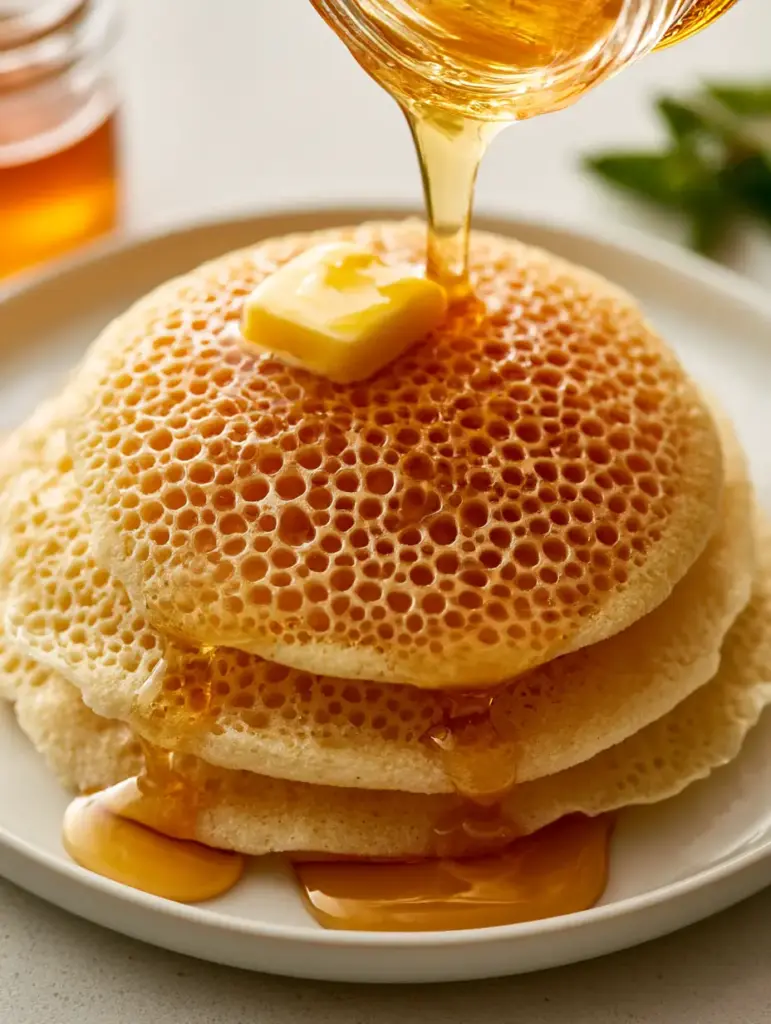
While the crepes are cooling slightly, prepare the glaze that makes African crepes legendary. In a small saucepan, melt 1/2 cup (115g) of salted butter with 1/2 cup (170g) of high-quality amber honey. Whisk until it becomes a thick, glossy, translucent golden-amber mixture.
Place a stack of three African crepes on a matte white ceramic plate. Pour the warm glaze over the top, ensuring it cascades down the sides and fills every single one of those thousand holes. Top with a small square pat of melting yellow butter and a fresh mint sprig for that classic Moroccan aesthetic. The result is a dish that rivals the richness of comforting dinner ideas but in a breakfast format.
Storage, Reheating, and Freezing
Storage: Once completely cool, you can stack the African crepes with pieces of parchment paper in between. Store in an airtight container in the refrigerator for up to 3 days.
Reheating: For the best texture, reheat them in a dry pan over low heat until warm. You can also microwave them for 15 seconds, but the pan method preserves the “springy” feel. Avoid the oven, as it can dry out the lacy edges.
Freezing: These freeze beautifully! Place parchment between each crepe, wrap the stack in plastic wrap, and freeze for up to 2 months. Thaw at room temperature before reheating.
What to Serve with These African Crepes
To create a full Moroccan breakfast spread, serve your Baghrir alongside:
- Fresh Mint Tea: The astringency of the tea cuts through the richness of the honey-butter.
- Amlou: A traditional Moroccan dip made of toasted almonds, argan oil, and honey.
- Fresh Fruit: Sliced oranges with a sprinkle of cinnamon perfectly complement the semolina.
- Savory Options: While traditionally sweet, some enjoy them with a side of soft goat cheese. Much like simple garlic butter pasta, the simplicity of the base allows for many pairings.
Frequently Asked Questions
No, traditional Baghrir uses both semolina and all-purpose flour, both of which contain gluten. You would need a specific gluten-free semolina substitute and GF flour to adapt this recipe.
You can, but the texture will be completely different. Semolina provides the structural integrity and ‘bounce’ that allows the holes to stay open and the crepe to remain light.
Never stack your African crepes while they are still hot. Spread them out in a single layer on a clean cloth or parchment paper until they are completely cool.
This usually happens if the pan is too cold or the batter hasn’t rested long enough. Ensure your yeast is active and the pan is preheated to a medium, steady heat.
Cooking one side allows the bubbles to reach the surface and pop, creating the holes. Flipping them would close the holes and ruin the unique honeycomb texture.
The Ultimate Recipe for Authentic African Crepes (Baghrir)
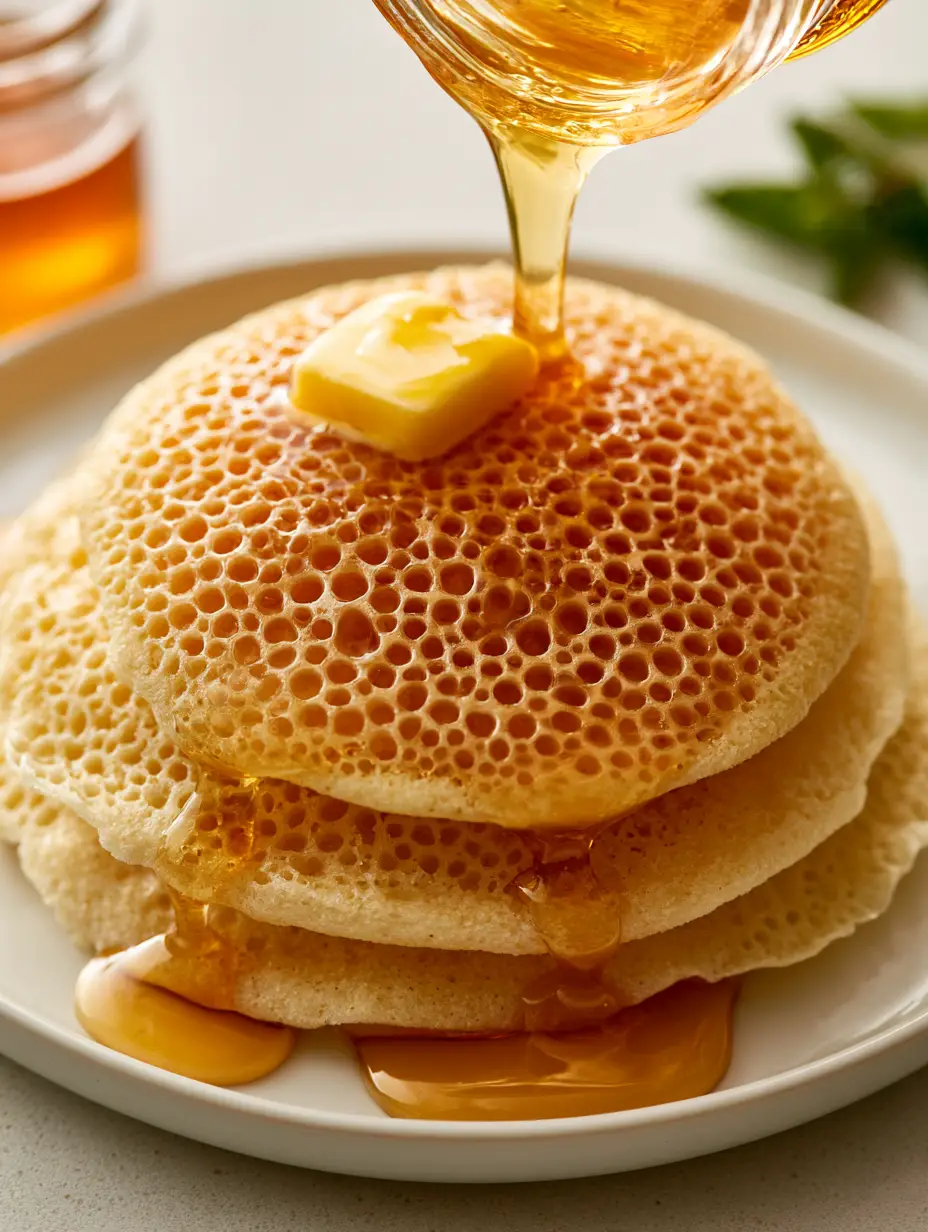
African Crepes: The Secret to Fluffy Moroccan Baghrir with 1,000 Holes
Ingredients
Equipment
Method
- Combine semolina, flour, sugar, yeast, salt, and warm water in a blender. Blend on high for 2 minutes until aerated.
- Add baking powder and pulse for 5 seconds to combine.
- Pour into a bowl and let rest for 30 minutes until foamy on top.
- Heat a dry non-stick skillet over medium heat.
- Pour 1/3 cup of batter into the center. Do not flip. Thousands of holes will form.
- Cook until the surface is dry and not shiny, about 2 minutes. The bottom should be pale golden.
- Melt honey and butter together and pour over a stack of three crepes. Garnish with fresh mint and a butter pat.
Notes
Use fine semolina for the best texture; coarse will be too grainy.
Join the Community!
Did these African crepes turn out with all one thousand holes? We want to see! Save this recipe to your Pinterest Breakfast Board so you never lose it. Follow @radiantdish for more globally inspired recipes. If you made these, please leave a 5-star rating and share a photo of your golden stack in the comments below!