There is something deeply soulful about the combination of slow-cooked onions and melted cheese. This French Onion Chicken Orzo Casserole takes the legendary flavors of a classic French onion soup and transforms them into a hearty, one-pan masterpiece that is as visually stunning as it is delicious.
Imagine a rustic white ceramic skillet filled to the brim with velvety, ivory-colored cream sauce. Every grain of al dente orzo is coated in a rich heavy cream reduction, punctuated by golden-seared chicken breast and topped with a bubbling mantle of toasted Gruyère and mozzarella.
Whether you are looking for a weekend project or a high-end weeknight dinner, this recipe delivers on every sensory promise. From the mahogany-dark jammy onions to the long, thin strands of melted cheese stretching from your spoon, this is comfort food engineered for the modern palate.
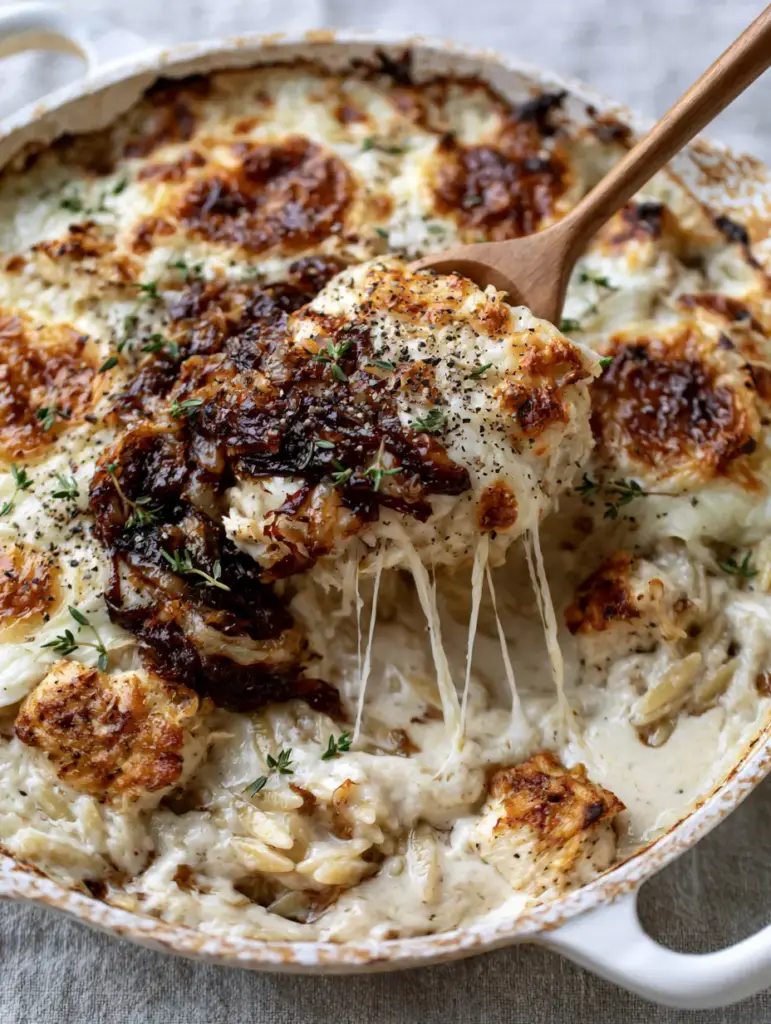
Why You Will Crave This Creamy French Onion Chicken Orzo Casserole
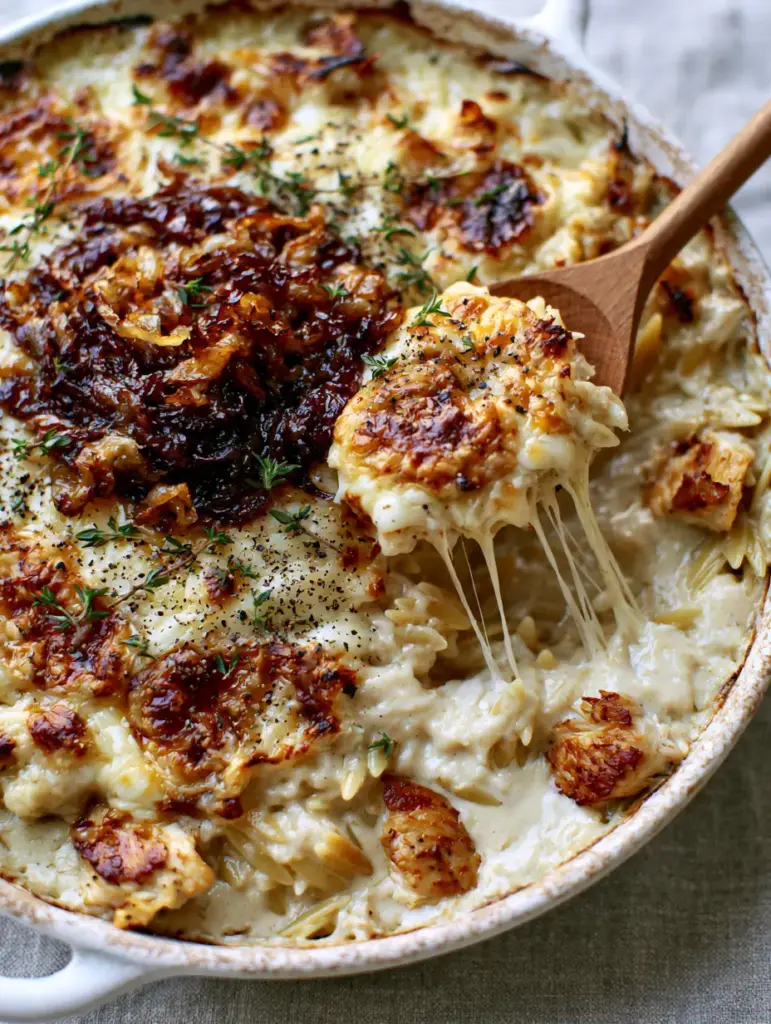
- Visual Texture Contrast: The deep mahogany hue of the jammy caramelized onions provides a stunning visual contrast against the pale, velvety ivory sauce and the charred golden spots of melted cheese.
- Gourmet Flavor Profile: By utilizing a heavy cream reduction and fresh thyme, we achieve a depth of flavor that mimics a 48-hour simmered soup in a fraction of the time.
- The Perfect “Cheese Pull”: The strategic blend of nutty Gruyère and low-moisture mozzarella ensures that every scoop offers those iconic, long strands of toasted cheese seen in professional food photography.
- One-Pan Simplicity: Despite the complex flavor profile, this entire French Onion Chicken Orzo Casserole is constructed in a single skillet, making cleanup as easy as the cooking process.
If you enjoy the rich, savory notes of this dish, you might also want to explore our classic chicken cordon bleu for another cheese-filled chicken favorite.
Essential Ingredients for the Ultimate Flavor Profile
Boneless Skinless Chicken Breasts: 1.5 lbs (680g). We cut these into bite-sized cubes and sear them at high heat to create a golden-brown crust that seals in the juices.
Yellow Onions: 3 large (approx. 900g). These are the heart of the dish; we cook them low and slow until they reach a jammy, dark mahogany consistency for that signature French onion sweetness.
Orzo Pasta: 1.5 cups (300g). This small, rice-shaped pasta is ideal for absorbing the heavy cream reduction while maintaining an al dente bite.
Chicken Broth: 3 cups (710ml). This provides the savory liquid base for the orzo to cook in, infusing every grain with poultry essence.
Heavy Cream: 1/2 cup (120ml). Added at the end, this creates the thick, velvety ivory sauce that characterizes a luxury casserole.
Gruyère Cheese: 1.5 cups (150g), shredded. This traditional Swiss cheese provides a nutty, earthy saltiness that is non-negotiable for an authentic French onion profile.
Mozzarella Cheese: 1 cup (115g), shredded. We use mozzarella specifically for its melting capabilities and the way it creates deep-golden toasted bubbles under the broiler.
Fresh Thyme: 1 tbsp (4g). Tiny fresh thyme leaves are stirred into the base and sprinkled on top to provide a floral, herbaceous lift to the heavy fats.
Unsalted Butter & Olive Oil: 2 tbsp (30g) each. The combination allows for a high smoke point when searing chicken while providing the rich flavor needed for the onions.
The Pro-Level Tool Kit for Skillet Success
To achieve the exact visual result of a rustic, slanted 45-degree angle food shot, equipment matters. You will need a 12-inch (30cm) rustic white ceramic skillet or a well-seasoned cast-iron pan that can transition from stovetop to broiler.
A sturdy wooden spoon is essential for deglazing the “fond” (the brown bits) from the bottom of the pan, which contains all the concentrated flavor. Finally, a sharp chef’s knife is required to get those perfectly uniform chicken chunks and thinly sliced onions that caramelize evenly.
Mastering the Art of Caramelization and Searing
Step 1: Achieving the Mahogany Onion Jam
In your skillet, melt the butter over medium-low heat. Add the thinly sliced onions with a pinch of salt. Cook, stirring occasionally, for 25–30 minutes.
Do not rush this process. You are looking for the onions to shrink, soften, and turn a deep, dark mahogany color. Once they are jammy and sweet, remove them from the pan and set them aside.
Step 2: Searing the Golden Chicken Chunks
Increase the heat to medium-high and add the olive oil. Pat the chicken dry—this is the secret to a good sear. Season with salt and cracked black pepper.
Add the chicken in a single layer. Sear until golden-brown crusts form on all sides (about 3 minutes per side). The chicken doesn’t need to be cooked through yet; it will finish in the oven. Remove and set aside.
Step 3: Toasting the Orzo and Building the Sauce
In the same pan, add the dry orzo. Stir it for 2 minutes until it smells slightly nutty and looks toasted. This prevents the pasta from becoming mushy.
Slowly pour in the chicken broth and use your wooden spoon to scrape the bottom of the pan. Bring to a simmer. Add the heavy cream and half of the fresh thyme leaves.
For more quick meal ideas that utilize simple pantry staples, check out our collection of 30-minute meals.
Step 4: The Assembly and Final Bake
Stir the seared chicken back into the orzo mixture. Top the skillet with a heavy, even layer of the shredded Gruyère and mozzarella cheese.
Transfer the skillet to a preheated oven at 400°F (200°C) for 15 minutes. For the final touch, turn on the broiler for 2-3 minutes until you see specific deep-golden toasted bubbles and charred spots on the cheese surface.
Step 5: Finishing Touches and Garnish
Remove the pan from the oven. You should see steam wisps rising from the bubbly surface. Spoon the reserved jammy caramelized onions into a generous nest in the center.
Top with a heavy sprinkle of tiny fresh thyme leaves and extra cracked black pepper. Let the dish rest for 5 minutes before serving to allow the velvety ivory sauce to set slightly.
Chef’s Tips for a Perfect Casserole Every Time
- Don’t Overcook the Orzo: The orzo will continue to cook in the oven. Ensure it still has a slight “snap” when you move the skillet to the oven to prevent a mushy texture.
- Deglaze Thoroughly: When you add the broth, ensure every brown bit is scraped up. That “fond” is where the deep French onion flavor lives.
- Room Temp Cheese: Use freshly grated cheese at room temperature. Pre-shredded cheese is coated in potato starch, which can prevent those long, thin cheese strands from forming.
- The Onion Shortcut: If you are short on time, add a teaspoon of balsamic vinegar or a pinch of sugar to the onions to accelerate the browning process.
If you’re planning a party and need more inspiration, these New Year’s Eve snacks pair beautifully with a hearty main like this.
Best Practices for Storage and Reheating
This French Onion Chicken Orzo Casserole is best enjoyed fresh, but leftovers are a treat. Store in an airtight container in the refrigerator for up to 3 days.
To reheat, add a splash of milk or chicken broth to the dish before microwaving or heating on the stovetop. This restores the creamy, velvety ivory sauce that the orzo naturally absorbs during refrigeration.
We do not recommend freezing this dish, as the heavy cream reduction can break upon thawing, leading to a grainy texture in the sauce.
What to Serve with Your French Onion Masterpiece
Because this dish is rich and decadent, we recommend pairing it with a crisp, acidic side. A bright arugula salad with a lemon vinaigrette works perfectly to cut through the melted Gruyère.
For a full-course dinner experience, start with some homemade mozzarella sticks or perhaps a lighter zucchini stir-fry as a side for those wanting more greens. If you’re looking for a refreshing beverage to wash it down, try our triple berry lemonade.
Frequently Asked Questions
Absolutely. Caramelized onions can be made up to 5 days in advance and stored in the fridge, which cuts down the active prep time for this recipe significantly.
Yes! Using beef broth will give the dish a darker color and a flavor even closer to traditional French onion soup, though chicken broth keeps the sauce looking a beautiful ivory.
Toasting the dry orzo in the skillet before adding liquid creates a protective barrier that helps the pasta maintain an al dente texture during the baking process.
If Gruyère is unavailable, Swiss cheese, Emmental, or a high-quality Fontina are excellent substitutes that still provide a nutty flavor and good meltability.
A combination of Gruyère for flavor and low-moisture mozzarella for stretch is the secret. Ensure you grate the cheese yourself to avoid anti-clumping agents.
The Complete French Onion Chicken Orzo Casserole Recipe
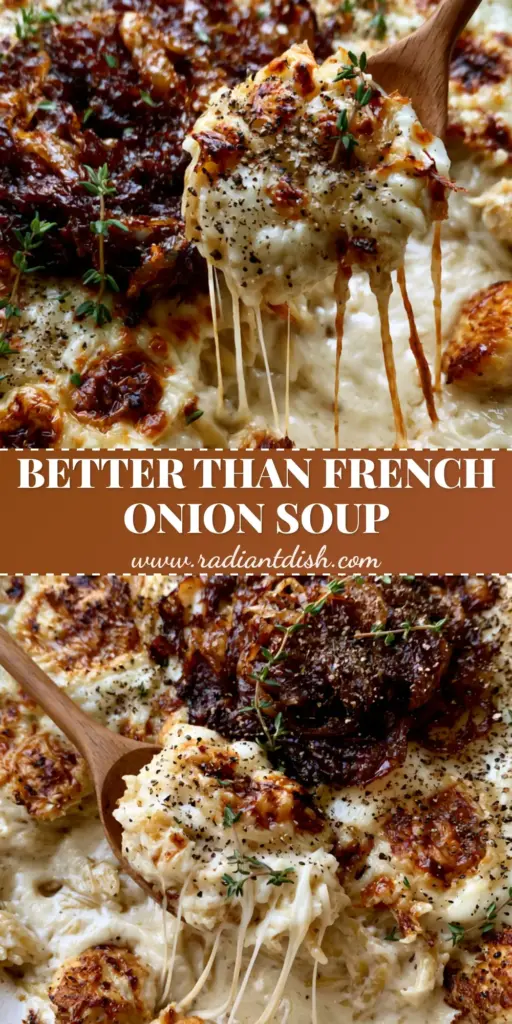
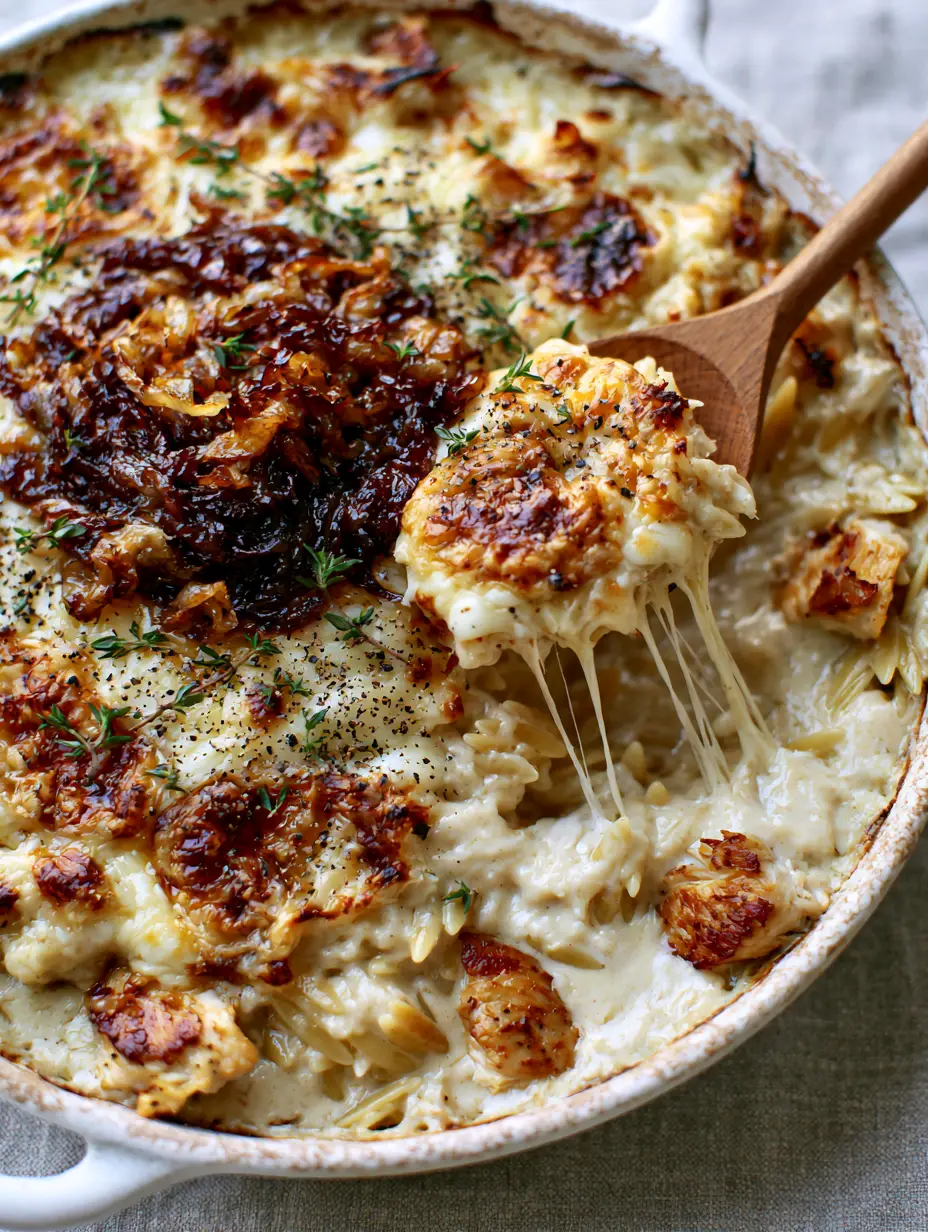
French Onion Chicken Orzo Casserole with Gruyère and Caramelized Onions
Ingredients
Equipment
Method
- Melt butter in skillet over medium-low heat. Add onions and cook for 25-30 minutes until deep mahogany and jammy. Remove and set aside.
- Add olive oil to the same skillet over medium-high heat. Season chicken with salt and pepper, then sear until golden brown crusts form. Remove and set aside.
- Add orzo to the pan, stirring for 2 minutes until nutty and toasted.
- Add chicken broth, heavy cream, and half the thyme. Deglaze the pan with a wooden spoon. Stir in chicken.
- Top with Gruyère and Mozzarella. Bake at 400°F (200°C) for 15 minutes. Broil for 2-3 minutes until cheese is bubbly with charred spots.
- Top with a nest of the caramelized onions, fresh thyme, and cracked black pepper.
Notes
Don't rush the onions; the mahogany color is essential for the flavor profile.
Bring the Bistro to Your Kitchen
This French Onion Chicken Orzo Casserole is more than just a meal; it’s an experience. The combination of the heavy cream reduction and the earthy Gruyère creates a restaurant-quality dish in the comfort of your own home. The steam wisps and the golden-seared chicken make it a true centerpiece for any table.
If you enjoyed this recipe, please leave a comment below and let us know how your caramelization turned out! Don’t forget to follow us on Pinterest for more visual recipe inspiration and share your creations with our community.